Showing posts with label critical theory. Show all posts

Sunday, June 9, 2019

A Response to Postmodernism: Asymptotes

(Inspired most recently by this random ask about metanarratives, but for people just stumbling on the topic check out this SSC post “Postmodernism for Rationalists”. And when discussing pomo, I am always reminded of this tweet by St_Rev: Postmodernism is like nuclear fission; true but too dangerous for humans to be trusted with.)

Let’s back up a bit. Lacan broke down mental experience into three parts: the Real, the Imaginary, and the Symbolic. I’m going to accept this, but a) ignore the Imaginary, and b) append Social to Symbolic because they are the same. Which is to say:

Our experience of the world consists of the Real and the Social/Symbolic. What does that mean?

The Real is well, actual reality that exists independent of human understanding. It’s the stuff that’s still there if you close your eyes. It’s the fact that there isn’t enough food no matter what the Emperor says, or that we will all one day die, or the cruelty of cancer, or the unimaginable gulf between the stars. It is the reality that victory goes to the side with more guns not the nobler cause, or that some people won’t get along no matter how much you love them both and try to negotiate peace.

The Real is usually far too complicated and chaotic and unbounded for us to comprehend. Like in the question of “when were the Dark Ages” in the linked SSC post, the Real is all the individual lives and experiences of people over that time period. It’s too big to even put into words, but it’s still undeniably there. Any attempt to just ignore the Real is called repression, and the Real will eventually rise from that and disrupt your plans.

The Symbolic is our attempt to make any sense of the above. It is how we split infinitely varied things into simple categories and binaries, like the insistence that everyone is male or female (or good vs bad.) It is the map instead of the territory, and *every single word* we use is just a Symbolic interpretation of far too messy Real. (Like this post recently asking just what is a boss anyway? Or the well written post “The Categories Were Made for Man, Not Man for the Categories”) Whenever we try to say something about every type of apple, or define what “life” is, or come up with an ideology that pits an obvious group of good guys and bad guys, or just try to predict the results of a scientific experiment with a probability curve, we are still thinking using the Symbolic.

This is not a huge sin. After all, we can not actually think about the ineffable Real, let alone communicate about it. If we want to make any progress at all, either in reasoning about the world or working with others, we *have* to use the Symbolic. It’s like physicists using models assuming spherical cows - it gets you somewhere, eventually, at least. (Certainly a tribe using imperfect Symbolic thinking would outcompete and defeat a bunch of brainiacs just meditating on the Real. Existence without using the Symbolic is just not sustainable.)

I even upgrade the term to Social/Symbolic since all of our social existence depends on how we use the Symbolic to express concepts to others. That’s well, what language is. And once you have a Symbolic term, and you share it with another via mouth-sounds or ink-scratches, then it takes on an independent Symbolic existence that can be read and interpreted by people who are neither you nor your intended target. Then these symbols really do have an external existence, spreading throughout the population, with no direction by a conscious mind. Words and concepts are like a virus living in the social body this way.

The narrative or metanarrative, is a Social/Symbolic entity this way - fairly detached from the Real that gave it meaning, and evolving based on what is most efficient for the social rules it inhabits.

Two brief examples:

- Science. Science is obviously a quest for the Real, and that is admirable. And yet even when trying hardest to do this, we create standards of objectivity and merit that reflect Social/Symbolic understanding. We talk of p-values and grant writing and peer review and hundreds of ways this search for the most raw truth is filtered through simplistic understanding, and incentive schemes that have long since become normal status-seeking rat races.

- Capitalism. Markets are a method of social relation of course. And yet the values and prices of things fluctuate in response to the necessities of the Real. If food becomes scarce, or a movie is truly terrible, or a new writer is brilliant beyond precedence, no matter how unexpected these things are to the powers that be, they can earn money and renowned in a market, proving some glimmer of the Real in doing so. Now the price of something is not an untainted mark of its true value, but it is at least related to it somehow.

Anyway, the tumblr version of Postmodernism (which is to say, that version that is most politically useful to the class of people who have currently discovered this concept - laypeople arguing about politics on social media) could be reduced to this:

1. In no cases do we ever know the Real, without relying on narratives found in the Social/Symbolic. (We can’t know when the Dark Ages began or ended.)
2. So choose which narratives you want to pursue based on Social/Symbolic reasons. (Do you want to align yourself with the narrative of the Dark Ages spread by the Catholic Church? By labor historians? Etc.)

The problem with these is that are true, but also noxious, as they would always mean dropping the evidence of our own eyes for the narrative of the class we are trying to support. And people who do this too much are very evidently stupid (in action, not in essence.) We see the results of this in Holocaust deniers and Stalin apologists and 9-11 truthers.

The issue is that they are forgetting that the symmetric case is true: the complete Real may be inaccessible *but so is the complete Social/Symbolic*. While amateur pomo knows you can never completely reach the Real, it forgets you can never *escape* it either.

In actuality, total Social/Symbolic is an eternal fantasy. It is referenced in FALC or the singularity, where you are immune from any needs and can spend all your time engaging with only concepts, or only the social sphere you have chosen, free of all messy entanglements. It is a powerful dream (or nightmare), with a lot to say for it, but it’s as impossible as knowing the mind of God. There will always be some element of the Real under the fantasy, repressed and pushing back in the ways we least expect or want.

Everything we know is between two asymptotes - which can approach the Real, but never reach it, and we can approach the pure Social/Symbolic but never realize it.

So an attempt to choose your narrative *solely* on Social/Symbolic grounds (like which side you want to support) will find itself constantly interrupted by rude counter-evidence. It might be the people voting against you, or your story not selling, or just an anxious feeling in the pit of his stomach. It’s really impossible to predict how the Real will erupt, but it always will.

You have to accept you are just stuck as a mutt in the muddled middle, never have authentic Real knowledge or pure Social/Symbolic simplicity, but a mix of both at all times.

Saturday, April 13, 2019

Accessibility Discourse

@Discoursedrome in a recent thread about "do difficult videogames face accessibility issues?" identified a tradeoff between accessibility and specificity. Specificity is the way in which a game (or any creation) is special, in how it is deep or thick or high-context or interesting, that generates enthusiasm - which often involves weird and arbitrary limits. The difficulty of the Dark Souls games is their specificity. The more you make something specific the more likely that some people won't be able to enjoy it - ie. disabled gamers may have trouble with the split-second timing of Dark Souls games.

In cooking, a chef's eagerness to experiment with new ingredients (or new preparations of old and unappreciated ingredients) is their specificity, and it can conflict with people who are kosher, vegetarian, allergic to peanuts, have a gluten allergy, or low spice tolerance. If you've ever tried to cook a meal for 60 people with different eating restrictions, you know how limited your freedom for creativity becomes.

You can look at romantic norms this way too: traditionalism provides a lot of specificity about who you should date: the other gender, if you're both unattached, on a specific ladder of rituals towards marriage (with appropriate class and station concerns). Bisexual polyamory of the form "date who you want and make up the rules that work for you" provides a great deal more freedom to people who were left out of the old system, but in that freedom often leaves people feeling lost or unexcited about their paths. The overly complex song and dance of (mildly d/s) traditional norms had specificity that are not entirely replaced by the new rituals.

In straight up internet argument, specificity loses to accessibility, because in mass media rhetoric, how can "I like my meals to be interesting" stand up against "okay well some of us would like to be able to eat them at all." However, specificity as a virtue does not really need to be defended, because people will keep independently inventing it on their own and discovering that they really enjoy it. Most new and vibrant forms of art and communities have high specificity - whether it Speedrunning Conventions or Immersive Theater or Weird Twitter. There is always a hunger for this interestingness that unconsciously outpaces accessibility, until the systemitizers notice it.

(My rhetoric may sound like I am selling accessibility short, but let me assure you that when there is something everyone loves that I can't experience or enjoy, my blood boils and I want it erased from the face of the Earth. I get the emotion behind it, and do not think people are wrong to experience it and act on it.)

I'm not taking sides on that tradeoff (yet) and I don't even think that tradeoff wholly describes the situation, because there is another dimension: audience size. Are you creating for yourself, for your close friends, for a small niche market, for a large national market, or the entire world?

With a small intended audience size you can be both specific and accessible - you're cooking a dinner at your home for five friends and you know one is allergic to peanuts but that still leaves plenty of freedom to experiment with an interesting meal. The larger the group you make for, the more accessibility limits you, and the more difficult specificity gets. (Recall that on a global scale, you can't even count on people using the same language you do.)

All of these traits exist in tension, but can be compatible to some degree.

There is an old adage in construction: Quality, Price, Speed: Pick too. Which is to say of getting your building done cheaply, affordably, and fast, you're going to have to sacrifice one. I think the "pick two" applies here, and in fact circumscribes my philosophical perspectives at different times (ie, the three masks.)

Accessibility and size - universalism. Making something is truly supposed to be for everyone with no limits on where they are, who they are, or what they are capable of.

Specificity and size - cthughaism. (Or what I often refer to as humanism, but we'll trade ambiguity for using a new term here.) This is the perspective that interestingness, richness of experience, the new and unexpected and complex is the best thing, the only important thing, and seeks to maximize this in all ways. This means art that is spread to the masses, and if some people can not enjoy it, then hoping they enjoy other art.

Accessibility and specificity (with small audience) - tribalism. This is the understanding that you can make the perfect combination of openness and interesting if and only if you group is small and you know them well, and it is the opinion that this tradeoff is worth it.

Thursday, November 30, 2017

Review Types: Food and Therapy

Reading reactions to Justice League made me realize there are two ways of reviewing movies, in terms of the logic they present.


The most popular, and often mocked, is movies as food. You know the type “Sometimes I want an expensive steak, but hey, sometimes I want a fast food cheeseburger, and this movie was a good cheeseburger.” There’s plenty of snark about that specific metaphor, but the logic behind it is less absurd and worth critiquing.


In this sense, what matters in the movie is the ingredients. We’re asking “is the movie good?” and the determinant of that is “Were quality ingredients put together using a known recipe?” If a movie isn’t good, it’s just because you can point to one ingredient and say it’s bad. The pacing was bad, the writing was saccharine, or the director is overrated. Such reviews are not a discussion of how different elements work together to produce something, but just operate on the assumption that if one of the ingredients is bad, that explains why the whole thing is worse. Or in the positive direction, a review will tell us the actors have good chemistry, that the CGI is seamless, the director is hip and capable of working with politically challenging themes - though not how any of these elements interact, beyond goodness multiplying with goodness.


This all points towards a very mass produced view of art. After all, that’s how we think of hamburgers, right? Once you’ve figured out how to make hamburgers, well then, just keep getting good ingredients, put them together the way you know how, and viola, you reliably have a finished product that will please as much as the first time.


If you liked Iron Man 1, well then Spiderman: Homecoming has the exact same quality ingredients, why wouldn’t you like it.


(The moral public image and political leanings of the stars of the film, are just one more ingredient these days that adds to its goodness or badness.)


Empirically, the philosophy doesn’t really work (or else churning out box office successes would be as simple as running McDonalds), but it’s still the basis for almost all professional reviews. It’s just easier to understand.

I'm lazy and examples of these are everywhere, so here's a random Justice League review from Rotten Tomatoes: http://www.screenit.com/ourtake/2017/justice_league.html


The good news is that those behind the scenes finally figured out that audiences of superhero movies prefer them not to be as morose, grim and humorless as most of DC Comics latest offerings, and like them having a little Marvel style humor thrown into the mix. I can't say if the late in production replacement of original director Zack Snyder with Joss Whedon (due to a family tragedy for the former) had anything to do with that change, but it's a welcome one that greatly benefits the offering. 
I'd wager there's more humor in this single film than all of its immediate predecessors combined, and much of that stems from Ezra Miller showing up to play the hyperactive, lightning bolt activated The Flash character. Much like Quicksilver in the "X-Men" movies, he zips along at high speed (thus making everyone else seem frozen in a freeze frame collage), resulting in some similarly fun scenes. But his naive eagerness and interaction with others are what makes him stand out. 
Jason Momoa gets some less hyper moments of humor playing the loner surfer dude type Aquaman character, but it's the presence of Gal Gadot reprising her Wonder Woman character that truly saves the day...and the film. The actress is so natural and comfortable in the part and the character is so powerful (above and beyond the physical) that you simply can't take your eyes off her, and the film really excels whenever she's present. Ray Fisher is okay as the part-human, part machine Cyborg character, but isn't explored enough to make him that interesting. Ben Affleck seems tired and ready to hang up the caped crusader character (which sort of parallels his Bruce Wayne alter-ego), and a character from past films makes a return (guess who) and livens up the proceedings in the third act. 
Which is a good thing as both the villain (CiarĂ¡n Hinds, heavily assisted by CGI) and his plot (assembling some powerful boxes to destroy the world) aren't anything worth writing home about. Many of these films really fail to create compelling antagonists and this is yet another prime example. As a result, you're not as invested in watching him get his comeuppance that you automatically know is going to involve lots of CGI heavy, multiple character fight sequences where too much is occurring and looks fake up on the screen. 
Thankfully, the return of that one significant character along with the presence of Gadot, Miller and Marvel-like humor makes most of the film easy and sometimes quite entertaining to watch. I would have preferred a more compelling story (rather than the usual end of the world material), better villain and less reliance on special effects. But enough of the pic works, even considering its various issues, to earn a recommendation. "Justice League" rates as a 5.5 out of 10.

***


At the other end of the spectrum we have looking at movies… like a therapy session.


You would not say about therapy: the client was very charismatic, and the story of their childhood had excellent pacing, but the lighting was flat and boring. B+.


Instead of grading it at all, we’d discuss how the elements (which might be awkward on their own) worked together to say something larger. “The way the client stuttered while talking about his mother,” says one thing, and “the fact that the client brings up academic success at any opportunity” says another. We find meaning both in the plain content of their utterances, and the details around the way they are delivered. The result isn’t good or bad, but it’s interpretable.

This is where the Group 3 type of film critique (and most academic work) ends up. The type of acting (flat, naturalist, manic, sensual) is seen as a filter on the words said and the plot elements. A director’s history is seen as context for themes they deal with in this work. How does the beginning of the session/movie compare to where things are at the end - are things the same, are there important changes, and what does that say about the nature of the problem the characters were struggling to solve?


Sure the movie is ugly (or the client is disruptive.) What does that tell us? In what ways is it ugly, and how can those be seen as deliberate choices?

Compare the above Rotten Tomatoes to people deciphering David Lynch's Twin Peaks, which emphasizes various unpleasant aspects to tell us how they comment on the broader work. https://lareviewofbooks.org/article/david-lynchs-late-style/#!
Lynch holds on this scene for an uncomfortable amount of time, lavishing seven cuts and nearly a minute of footage on Mr. C’s tactile show of dominance, the effect of his gesture passing from intimidation to a strange kind of tenderness, registering the tragic feeling of the strong for the weak they nonetheless mean to exploit. We later find out that Jack gets murdered in this scene, but we never see the act take place. His death, we feel, is already written in the lines of this gruff but malleable face, the skin gone slack, vulnerable, now just an unresisting sculptural material for the dark forces that menace and shape it. In this gloriously inexpressive pause, Mr. C seems to be asking himself: what can this goony, docile face be made to sing? 
In many ways, this long squeeze is perfectly representative of the oblique, beguiling aesthetic of the new Twin Peaks. It is not only that the pace is so exquisitely slow or that the scene’s narrative purpose is unclear. We are also left to wonder about the spotlight of lyrical dread lavished upon a character so soon to disappear from the story, just as we may be disarmed by the proliferation of arresting minor characters, stray images, and tangential action throughout the series. 
Lynch has always had a way of elevating peripheral performances to derail our sense of narrative logic (think of the man in Wild at Heart who quacks like a duck, or the inexplicable presence of anthropomorphic rabbits in Inland Empire). But no work of Lynch’s has been so gloriously digressive as Twin Peaks: The Return, nor has any work of his been so elliptical or so unforgivingly distracted by the characters, images, and scenes that seem to exist to the side of its story line. In this, the series embraces a narrative style that is arguably even more inventive and jarring than the narrative itself, with its baroque mythology of lodges, personified evil, and interdimensional rabbit holes. 
The new season challenges us most in the way it seems to undo the story it is telling, moving out of sequence and perversely out of rhythm, indicating a wealth of paths it has no interest in going down, spending long stretches of time in scenes that do not immediately further the plot, and jumping without warning from characters and locales we know to those we don’t (and never come to know). The result is a feeling of erratic, transfixing chaos. A greasy drug-addled woman sits in the Roadhouse talking with her friend about zebras and penguins, scratching the “wicked rash” in her armpit. A woman frantically honking her horn screams at Deputy Briggs to let her car through traffic because, as she puts it with incredible and hideous fury, “We’re laaaaaate!” while a diseased young girl lurches from the passenger seat, vomiting a dark trickle of green slime. A young girl waiting for a friend at the Roadhouse is removed from her booth by two grown men, drops to her knees in the middle of a concert, and crawls through the crowd of dancers before screaming at the top of her lungs. In any other series — even the original series of Twin Peaks — these scenes would have consequences: they’d be explained or taken up again or at least referred to in passing later on, in order incorporate them into the larger plot. In Lynch’s hands, they are left only as refractory trace variations of the show’s central action.

This way, every movie becomes a complex inkblot, a source for endless analysis and conclusions that are both more and less than “good, bad, should I see it.” This view has its flaws as well (such as the reader bringing so much subjective baggage to their interpretation that they can’t really provide useful information for anyone else) but the point is how different it is, and why it’s valuable to keep this attitude in your toolkit.

(This is not the same thing as SECRET MESSAGES delivered through a film, like explaining how random names are actually references to some historical event, a la a Wizard of Oz being about the gold standard, or Room 237 about The Shining. These sort of fan conspiracy theories aren't really substantive, anymore than if you believed your therapy client could best be interpreted by taking the first word of every anecdote, and stringing them together to find out their message from their Russian spymasters.)


The therapy mode is much more engaging with the Real of the work, picking up on random details and incorporating them. As I mentioned with Justice League, few of the professional reviews that wanted to tell us whether it was “humorless” or “grim” or not, said anything about the fact that the first minute is nothing but a diagetic paean to Superman, let alone what the meaning of that choice of introduction was. When you read a therapy review, at least you see the elements the critic is talking about - when you read a food-type review, you might wonder “did she even watch the movie?”

***

Or: “reviews” vs. “criticism.”
(Also note that these aren’t just different styles of doing the same thing but different goals really: reviews/”food” finds its fundamental value for people who haven’t eaten the burger yet, while criticism/”therapy” is most useful for people who have already been to the session. A RottenTomatoes-style aggregator of critical reception of a work would be as stupid as a printed collection of food-style reviews.)

I mean really it’s “types of discussion”, I’m not really sure any words like review or criticism properly categorize the difference. Youtube videos that tell you 100 things wrong with a movie would be called “criticism” but are the highest example of this ingredient-based analysis.
I think you’re wrong with the “different goals” and that is related to how badly the food-style gets its own goal wrong. All reviewers, myself included, would love the ability to look at a work, and be able to tell someone else whether they will like this movie. That’s basically the holy grail of the entire review edifice (including as you say, aggregators) and particularly Hollywood planning departments.
Food is just a very simple way of trying this, and it fails fairly badly. It does not turn out that “script by Whedon, acted by Blanchett, plus social justice themes, plus famous IP” makes something you can actually predict people will like. Certainly not to the degree that I can predict a friend will like my risotto recipe.
Therapy is a different attempt/style to figure out “what is going on with this movie” that ends up in a very different place, but really does start with the same question “why did I like Empire Strikes Back, but not really Return of the Jedi?”

Monday, August 28, 2017

"Read Another Book"

One of the most common refrains in left-of-center twitter has been people making jokes about the current political situation via Harry Potter or Game of Thrones (often but not always, liberals with a focus on identity politics) and leftists looking for a fight responding with “read another book!” and denunciations of this sort of pop-culture focused political analysis. (Freddie deBoer was an obsessive of this particular contrarianism.)
My blog started as a 30 part series analyzing the political implications of the Star Wars Prequels, so I’m not exactly neutral in this fight.
But it’s also true that these tweets trying to serve as a rallying cry equating voters for Hillary Clinton with Dumbledore’s Army are repetitive and banal. They seem to be failing in a particular way, over and over again, that does invite some generalization.
And the distinction you want to make is between Immersion vs Analysis.
SMG:
The longer answer is that the memes reflect an extremely pervasive nerd ideology.
Nerdism places incredible emphasis on continuity, so a film that eschews this is incomprehensible. Note how, despite the film being incredibly stylized, the conversation over Fury Road is dominated by plot synopses and descriptions of the worldbuilding. Things like Max’s ability to predict the future are ignored. When the ultimate objective is to catalog plot points on wookiepedia, the fact that Optimus Prime disappears between shots is a threat.
There are also elaborate fantasies of Bay as a despotic sexual harasser, which overwhelm and terrify the Tumbler subset of nerds. In this view, Bay is responsible for the theft of society and we can have a pure liberal multiculture if we simply eliminate people like him through advanced twitter shame-campaigns. Reddit MRAs call meme-repetition ‘signal boosting’. In Fury Road, Immortan Joe is exactly such a Michael Bay figure: he loves big cars, explosions, and literally holds Rosie Huntington-Whiteley captive. So Fury Road provides a variant on 'Joss Whedon’ liberal feminism, where we enjoy Joe’s evil - but only so long as he’s badly beaten up at the end. Have your cake and eat it.
This is part-and-parcel with the above. Nerds demand an immersive franchise universe (e.g. the 'MCU’, the Star Wars EU, the Alien 'Quadrillogy’.) and ideological purity. Oppression cannot be presented as systemic. It must always be a moral threat from 'outside the universe’. Luke Skywalker is 'natural’, and Jar Jar Binks is an artificial imposition by Lucas, the degenerate.
(The same phenomenon occurs when a superhero is recast as black, or female. The normal crass commercialism of comic films is suddenly unacceptable, suddenly perceived as an artificial imposition by 'SJWs’.)
It is immoral for Bay to depict a woman as powerless. Megan Fox’s character 'dresses like a slut’, but not in an 'empowering’ way. Even though, in the films, this character trait stands for her misguided attempt to escape poverty by selling herself, class-ignorant nerds vacillate between slut-shaming Fox and demonizing Bay. The skimpy clothes in Fury Road are acceptable because they are imposed by Joe.
As I noted much earlier in the thread, Fury Road’s narrative structure is identical to the entire 6-film Star Wars series - but condensed into a single film, scrubbed of objectionable/satirical content, and presented in chronological order so that it ends with the triumph of the liberal rebellion. The meme-elevation of George Miller to greatest living filmmaker is likewise a condensed, inverted version of the ridiculous meme-demonization of figures like George Lucas and Shyamalan.
People who literally do not know what cinematography is now write book-length fantasies about how 'lazy’ JJ Abrams is, or devote entire webseries to debating whether Matthew Vaughn is racist. It’s a false progressivism based around punishing celebrities’ perceived sins - lust, greed, sloth, etc. - via endless twitter campaign.
No nerd has ever gotten insanely mad at (say) Wim Wenders or Jane Campion, and nobody gave a thought about Miller when he made Babe and Happy Feet. But once someone makes a film in a science fiction/superhero franchise universe… God help us all.
And most of these “rallying cry” tweets and macros can be read as the same desire for immersion into the franchise universe. What Hogwarts House are you? Or more politically, don’t you want to be there when Harry defeats Voldemort? Because your fight is just like the fight of the good guys vs bad guys in that franchise.
This is usually bad and I agree with the dismissal of it.
But if you’re using the art for actual analysis, that’s great. That’s what art is for. It presents a subjective truth about the world, that we can use to understand our own circumstance.
For instance, in Harry Potter, you could write about how Slytherin represents a fantasy of the reactionary elite who want membership to be determined mostly by birth, whereas Gryffindor represents a meritocratic elite, that definitely posits some people as better, more important, and worthy of special treatment above others, but instead of merely being based around birth, allow in special exceptions for people smart enough, hard working enough, or charismatic enough.
(There’s exceptions to these, like Slugworth or Diggory, but these are broadly the camps the people from those houses stand for – with Ravenclaw being the weirdo-uselessly-smart-people, and Hufflepuff being everyone-else-who-has-nothing-but-eachother.)
This makes Gryffindor of course, analogous to Western capitalism. Most people are oppressed, but there is hope for the Hermione’s of the world, etc.
See, I wrote a bunch about Harry Potter, but none of which is about a desire to be in that world. In fact it’s a resignation that we are already in that world.
Do that, and you can write as much about Harry Potter as you like. Hell write a 10 page tumblr post on the way movie Dumbledore says one line, that’s can still be interesting and insightful.
***
(This doesn’t mean immersion is a guilt-inducing sin. Fan fic and RPGs are often about immersion. That’s great as entertainment. Just don’t try to sell it as political activism too, unless you’re critically engaging with the work.)

Thursday, August 24, 2017

The SMG Gamergate Thread

In 2014, when the geek internet was blowing up with the controversy Gamergate, the forums at SomethingAwful.com were no exception. It was such a toxic subject that it was confined to one thread. SA’s resident communist movie critic, SuperMechaGodzilla, entered the fray – condescendingly lecturing everyone on capitalism, the fun of videogames, Christianity, anti-semitism, and media studies.

It was fantastic, and extremely educational. A point of view on GamerGate that was neither social justice totality, nor liberal/libertarian defensiveness.


His posts from the thread have been copied here for posterity.

Everything below here is written by SMG, who is not me. Posts are separated by quote bubbles, or an asterisk.


Tuesday, July 18, 2017

Cargo Cults: 17776 and Homestuck

Jon Bois' epic about the future of football, 17776 just finished. If you haven't read it, you should, or at least read the first page/chapter.

A number of commentators, both on tumblr and reddit have said it's very similar to Homestuck, the MSPA adventure, and there's definitely an overlap of fandom. Homestuck, remember, is a meta-textual experimental piece of outsider art about kids who find themselves going on fantastical quests in a computer game after the world has been destroyed.


They're not wrong, but they're not right either. And their comparisons are a great example of cargo cults.

The phrase "cargo cult" refers to island cultures that would make first contact with Western civilization, and would see all the material goods they brought, and so try to replicate this process of receiving cargo by building runways or statues of planes or whatever else looked like the Westerners.
So the term refers to worshiping the superficial aspects of something complex, and ignoring the true reasons it works.

The basic explanations for why Homestuck fans like 17776 is "they are chatlogs with different colored text and typing styles to represent different characters" and "JUICE is a lot like Dave" (sarcastic, mean, but so enthusiastic that he can't resist info dumping about things he cares about) and "it's a mix of video and bad, static html" and "it references pop culture."

Except this is a pretty bad explanation. Why? Well for one it's really easy. To make, that is. Like do you know how many Homestuck fan artists have made fanfic with "different colored text" and "someone who sounds like Dave?" It's not a hard thing to try. And yet "capturing the feeling of Homestuck, enough to enthrall fans" is much harder. Why is that? They're mistaking the tactile details for what is actually compelling. Cargo cults.

The first thing that really makes it work is the "rapid recontextualization." Already on chapter one, you have this slow dialogue happening between Nine and Ten over the course of years, slowly revealing stuff but mostly a) entertaining us with their dopishness and b) slowly doling out facts that explain the situation. It's agonizing. And then, on a dime, something unpredictable happens that accelerates the fuck out of the story, giving them instant communication and explaining who the satellites are, complete with dramatic screenshots of satellite related stuff. And after that point everything in the story is in this new context and new speed.

Hussie did that a lot too, with interminable dialogues between John and whoever, point and click hunts by John (or whoever), until a random thing happens and then bam, we know a whole lot more about the (much wider) world in one instant. This is frankly some kind of operant conditioning that addicts a non-negligible part of his audience. It's no surprise it would grab the same people.

Bois in particular does this with the video pieces. It's not just "it uses both static html and video", but the way it uses video. Which is to provide a sudden jump in information, showing the project exploding to a whole new scale. Compare the first video at the bottom of chapter one, with something like Act 2 End: Ascend. They are very similar feelings of suddenly "everything gets real now."

In this way "dialogue, dialogue, snarky/self aware dialogue -- eye opening video of sublime realization (followed by similar dialogue commenting on that video-enlightenment)" operates as a tandem pair, neither entirely working their full effect without the other. This is where Homestuck draws its power, not "someone is snarky like Dave."

Although it's not a coincidence the Dave voice repeats either.

I mean, the most important voice is not the Dave/JUICE voice, but John/Nine. They are, in Tarot terms "the Fool." They are the blank slate protagonist who is only just now learning everything about the world, along with us. Many critics would call this "the audience identification character", but it's not really who we see ourselves as, they are just the lens we can most easily learn about the world from.

Well, it makes sense that the Fool is first introduced to the world by someone smarter than us, but patient and benign. That is the Rose/Ten character. Only after we have the discoverer character, and the teacher character, can we have the third: the meta-aware character. That's Dave, that's JUICE, and that's our actual audience identification. We're genre-savvy, detached from the story, and prone to snarky comments. So both MSPA and 17776 have this same introductory tryptych: Fool, Teacher, Irony-master. It's a good combination for laying out a fictional universe (and explicitly stating to the audience the literary themes of this universe, as Dave/JUICE often does), and that's why people feel such similarity between the two.

Same with the pop culture references. Every work of art references pop culture these days. The key here is that 17776 and Homestuck both blatantly reference pop culture, and aspects that are not at all relevant. You get Con Air and Steely Dan coming up (but not Hillary Clinton or I lik cow or the Wire.) It's decidedly silly stuff, that tells us a lot more about the characters involved, than really makes us feel a connection to them.

Of course, both artworks explore a post-apocalyptic scenario. Homestuck deals with an Earth that has been destroyed, and what the relevant kids do beyond that, and 17776 deals with an apocalypse that ended all struggle and meaning to life, forcing people to discover new meaning. It's about what happened to our world after something major destablized everything important about it. Post-apocalypses are just commentaries on the world as it currently is, but laid bare. And with this tryptych we can get an accessible explanation: the Fool asks what's going on, the Teacher answers in the Watsonian sense, and the Ironist answers in the Doylist sense, explicitly telling us why the author is doing this here.

This works well with the middling desires of most of the audience: they are reading webfic because they want to explore something new, they want world building that is interesting and makes sense diagetically, but they want a little bit of thematic awareness that makes them knowledgable art critics.

Once we have gotten used to this trio (or rather, right before we have gotten used to them, and when we feel we are just getting the groove of the conversation,) both works then suddenly switch gears and add new voices. These are very down-to-earth voices, that assume a high degree of context to understand. (Often when switching scenes, you're coming in mid-scene to the next thing, and the first few lines of dialogue will be the reader trying to catch up to what's going on. It's mildly intellectually challenging, but more, it's constant and addictive.

Now in Homestuck, those new voices are eventually built up and worked into the diagetic plot, whereas in 17776 those voices are instead worked into the overall thematic message (often as explained by JUICE.) This split between emphasis on building plot, vs explaining its themes goes all the way through to the two very different endings (one of which was fulfilling, and the other of which... was really not.)

There are other thematic and mechanical parallels that make 17776 and Homestuck work similarly, and you can play around with them yourself.

**************

However, this obsessing about cargo cults can be a trap, like the old lady asked about what supported the turtle who carried the world on its back. "It's cargo cults all the way down."

The phrase cargo cult creates a dichotomy between that which is superficial and misleading, and that which is deep and the real meaning of the work.

But, breezy thematic analysis (like my own) can be just as cargo-cultish. You list off some words like genre-savvy, paganistic, or ironic detachment and at least some people will just nod along to how cool you sound. There's no guarantee you've found the real meaning, and haven't just found another idol to worship.

This is of course because there is no core, essential meaning to the work.
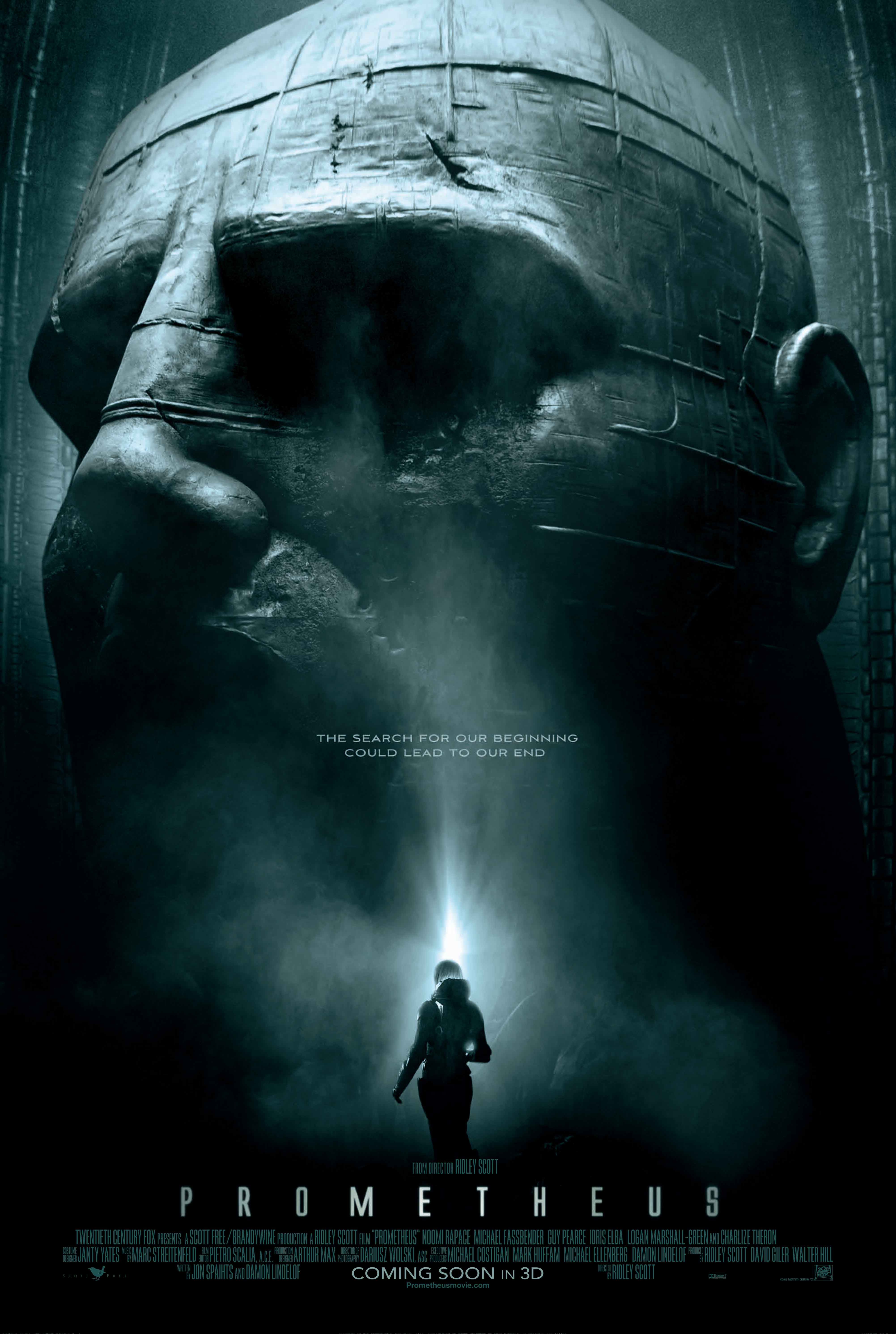
Holloway’s desire is to ask the alien-gods the meaning of life. This goal is utterly unobtainable, and the film establishes elsewhere that life has no inherent meaning (existence precedes essence) and, even if one could speak to the alien-gods, the message would be something unsatisfactory like 7*7=42 or horrific like Event Horizon’s ‘we don’t need eyes to see’.  
SMG on Prometheus
Especially in art. There is only the superficial.
One should thus invert the usual opposition within which true art is “deep” and commercial kitsch superficial: the problem with kitsch is that it is all too “profound,” manipulating deep libidinal and ideological forces, while genuine art knows how to remain at the surface, how to subtract its subject from the “deeper” context of historical reality. 
Zizek
So you're peeling back the layers of the onion. On the first layer is "different colored text, and sounds like Dave," and the next layer is "uses video as a climactic way to broaden the scope of the work." And in some ways that next layer can be more useful - in this case I think it explains affinity between these two works better, and offers a more reliable predictor of what else fans will like.

But it's still layers of the onion, and you'll never reach some inner kernel of pure meaning. You can never guarantee that you have found "what audiences want."

To address the original analogy, you could imagine some start-up entrepreneur who laughs at the cargo cults of Pacific Islands, and thinks the real idols you need to worship are the global supply chain, and synergy, and strengthening the free market. Now they might have a practical understanding of how to build their company, or they might just think that if they say enough buzzwords then investor capital will be drawn to them and they will get rich.

Tuesday, June 27, 2017

MGS5: Quiet Revulsion

The most controversial figure in video game auteur Hideo Kojima's last installment in the Metal Gear Solid franchise was the scantily clad sniper "Quiet."


It's even more disturbing in the game, with motion, and rain, and dancing, and Kojima's typical "in your face" blocking.

But we need to remember that when something is disturbing in art, that's truth. We need to move towards the discomfort, and find why we are so unsettled. So let's fully investigate this character.

Tuesday, April 18, 2017

Prometheus: Existentialism, Horror, and Simulation

Since the transformers.pdf went around recently, this reminded me that my favorite film analysis was by SMG on Ridley Scott's Prometheus. (paywalled link, but the relevant text is pasted below so don't worry.)

This is an insanely good thread about existentialism, horror, and simulation, which made me really appreciate the movie more and was largely responsible for my thoughts about horror and meaning (and of course my previous post on the movie.)

I've gone through the thread and selected the posts that present this analysis. It's very long, and you have to get used to the in-media-res of assuming SMG is responding to some argument without seeing it yourself, but it lays out the connections between film-making and how we define our own reality with clarity and wit. It's also incredibly arrogant and ungenerous to his interolocutors, but it's better to have an opinion strongly represented that lets the audience choose for itself whether and where it is correct.

Watching the film first is helpful, but not necessary.


Everything below here is written by SMG, who is not me. "***" separate different posts.

Thursday, March 30, 2017

*Why Movie Criticism?

Why is movie (and pop cultural) criticism such fertile ground for popular political analysis? It’s certainly something I engage in whole-heartedly.
You may have read about sportswriting becoming a liberal profession, and while that is interesting too, this is a fairly different dynamic. Sportswriting has long produced far-ranging criticism because it’s such a Rorschach blot. Sports is so empty and so chaotic (and so emotionally charged) that what we read into it says a great deal about ourselves. Like financial opinionating, there’s a lot of information and little hard theory, so it’s the perfect sea for projecting your ideology onto. (It’s hard not to see the ideology in the hilarious Fire Joe Morgan.) This is not entirely a good idea.
Movie-criticism-as-political-analysis doesn’t come out of the same tradition, especially when you devote thousands of words to decade old movies. There will always be a market for adding to the hype of an upcoming movie by saying How One Actress Is Racist or Defending The Casting Of A Racially Charged Role, but that’s not the same as thumb-suckers about movies past.
In fact, presentism is always a problem in philosophical writing (and no there’s not a hard line between political and philosophical.) Bloggers write essays on timeless subjects, people ooh and ah over them for a few days... and that’s it. If you’re very lucky you get as remembered as Tolerance For The Out Group, but usually such insight porn gets no more than a few days shelf-life. Who links to Less Wrong or The Last Psychiatrist posts anymore?
Instead, virality demands insight-porn about ongoing events. Tell us how your theory of anomie explains Trump. Look at feminism through the lens of a gamerbro’s bad breakup. Explain how Hillary Clinton is the perfect incarnation of the posthuman subject (oops I need to write that one.)
However, as most comedians and philosophers know, fuck topicality. Your “insight” is now trapped in a context that will seem over-rated and over-discussed next week, and completely foreign and opaque in five years. You’ve given your deepest thoughts a shelf life, and a very short one at that.
(This was much of the drive behind Vox’s “explainer journalism card stacks” where topical content could be evergreen and easily refreshed for whenever a subject comes to the fore again. I think history has given that approach a resounding “eh”.)
So no one’s going to read your dry thesis on social cliques and judgment, or they’re going to forget your fragile hot-take on Mencius Moldbug once everyone stops caring what Lambda Conference is. What are you to do.
The answer is movies (or, if everyone has read it, some books. Or a play if for some reason everyone in the country becomes obsessed with a Broadway hit.) If you write a political analysis of the themes in a movie - not whether a certain actress is in political trouble, that’s just gossip, but about the movie itself - then it feels like a live story. But it’s also a story people will understand decades later, as one they know the details of and can even immerse themselves in by rewatching the movie.

Friday, February 17, 2017

Seinfeld and God

Seinfeld was the most successful sitcom of the 90's, and has since been denounced as one of the most morally bankrupt pieces of art of the generation. The "show about nothing" to many critics became "nothing matters."

This is completely wrong, and instead Seinfeld provided a valuable contrast between morality and ethics, two words often used interchangeably but importantly different.


There are endless articles about the nihilism of Seinfeld. This is the conclusion from the most well written one by Chuck Klosterman. 

Seinfeld was never a show about nothing, even when nothing happened. Seinfeld simply argued that nothing is all that any rational person can expect out of life. It was hilarious, but profoundly bleak. By consciously stating it had no higher message—the creators referred to this as the “no hugging, no learning” rule—it was able to goof around with concepts that battered the deepest tenets of institutionalized society. It was satire so severe that we pretend it wasn’t satire at all.Most episodes of Seinfeld circuitously forward two worldviews: The first is that most people are bad (and not very smart). The second is that caring about other people is absurd (and not very practical).

This all sounds very convincing, but also feels completely wrong when watching the show. It's easy to say "there was no moral in that episode" or whatever, but that fails to investigate what is actually going on, scene to scene. In what way were these people being bad, what were specific examples, how did the scene make us feel? Give me an example where Jerry was just greedy and caring about someone was just absurd, and is that all that was going on in that scene?

(The entire point of this blog is to subject media to "atomic analysis" - instead of saying something like "Star Wars means classism", it's to zoom in on an individual scene, character, or shot and say "What is going on in this image? Oh, classism.")

And watching Seinfeld, this definitely isn't a universe without rules. Every goddamn episode has several rules of society the cast obsessed over. The third episode contained an extended scene about the rules of rock paper scissors and how you claim dibs on a New York apartment.

Perhaps an episode will find Jerry falsely accused of picking his nose. Or Elaine considering rules of contraception. Or George will be trying to gift a damaged sweater. Or Kramer will more often break a rule, and the others will have to explain to him why it was bad of him.

And this, more than the "nastiness" of the characters seemed the eternal appeal of the show. We all live in a society with countless unwritten rules that define whether you are a good person, or a bad person. And Seinfeld was a show where these rules were dissected, and played with, and discussed openly. That is about as fun and addictive as TVtropes to many people. These "rules" were the heart of the show.

And the cast did not take these rules lightly. Quite the opposite, they lived in constant fear of being caught breaking a societal rule. Sure, they knew they were good, reasonable people who should be considered polite members of society, but they were worried that at any moment someone else would think they were rule-breakers, the worst of the worst. Like Jerry just scratching is nose, but it looked like it was nose-picking from the side, and so someone might think of him as a nose-picker, and this would cost him a relationship with a hot model.

***

The wikipedia definition of morality is "the differentiation of intentions, decisions, and actions between those that are distinguished as proper and those that are improper"

Morals are the set of rules you follow to be a good person. Seinfeld talked more about "morals" more than any other television show in its decade.

Despite taking them very seriously, the characters would frequently be talking about how to find loopholes in the rules, or why their motives to evade the rules were pure and acceptable, or how unjust it was to be treated like a rulebreaker by the good members of society. They were like tax lawyers, who took it very seriously never to violate the letter of the law, but had zero investment in the spirit of the law. This sort of perspective was helped by all the times they were falsely accused of rule-breaking, or when an episode would start with one of them making a faux paus that broke some rule they didn't know about, but the other cast would condescendingly inform them of.

What was the source behind these rules? It was never religion, or a reasoned philosophical system, or what their heart told them - all rules were just social constructs, supported by the entirety of Society, in all of its terrifying ubiquity. When a rule was broken, every person the cast member encountered would begin treating them harshly, like some sort of unconscious outcast. The characters were entirely motivated by some Big Other who was judging them - and often judging them incorrectly ("I was only scratching my nose!")

Of course, never breaking a rule was impossible. Either you might not know it (there were hundreds, enough to feed eight seasons of episodes, after all), or you might be misperceived as having broken a rule, or you might have thought you could get away with it but you embarrassingly got caught. This just led to a constant anxiety, which fed the spirit of the whole cast.

The show wasn't just amoral, it was outright anti-moral. Why would it be okay, or at least sympathetic, to treat morals like this?

***

The wikipedia definition of ethics is "the branch of philosophy that involves systematizing, defending, and recommending concepts of right and wrong conduct."

Ethics are the why behind any rule. And in the Seinfeld universe, the answer to every why is "because God says so". Not literally, these were all Jewish atheists, but they were appealing to a source of authority that was as vague and inscrutable as God: "other people," with no specificity or limit. Sometimes they would throw in "without rules everything would be chaos!" type justifications, but that's no explanation for why this specific rule.

In fact, Seinfeld gave us the fantastic Moops rule of legal interpretation:


The plaintiffs’ argument is that the direct language in that single line is all that counts, and the language in the rest of the law does not. This is a legal argument that has no chance to win over judges who aren’t desperate to latch on to any rationale to gut Obamacare, and only a tenuous chance to win over even judges who are. The argument is, Democrats in Congress made a typo when you wrote Obamacare, so ha-ha, you lose. The card says “Moops.”

Lesson: rules of morality without deeper justification are just fucking terrible.

But this does not mean there is no right or wrong in the Seinfeld universe. The scene above clearly indicates George is behaving wrongly: he is ignoring truth, and he is being a jerk to a medically disabled kid. But neither of those things are written in the rules of the game, so they are not the focus of his morals.

But the moral rules in Seinfeld are worse than arbitrary, they are enforced by the social order. They are a source of fear and anxiety for the cast, and actively push them to adhere to letter-following instead of spirit-following. There is no room for compassion, or truth-seeking, or whatever fundamental ethical drive should motivate human behavior, when they already have a labyrinth of strictures to keep track of.

And this is the existentialist problem with God. It's not that God couldn't exist. It's not that God couldn't even provide rules for human behavior. But what if He did? Humans would just be obsessed with trying to follow these rules, in fear of when they'll be caught or misperceived (by God!) for breaking a rule when they really didn't mean to. Humans would quickly go from Jesus' message of universal compassion to, well,the last 1500 years of the Catholic Church.

This is not a post to laugh at silly Christians worshiping a false idol. For almost every culture, something as big and vague as God comes to stand in for that judging force, the one who gives us these arbitrary rules and is waiting for us to slip up. In communist Eastern Europe it was the State, in 1990's New York it's the Other of society, when we are children it is our parents.