Showing posts with label zizek. Show all posts

Sunday, June 9, 2019

A Response to Postmodernism: Asymptotes

(Inspired most recently by this random ask about metanarratives, but for people just stumbling on the topic check out this SSC post “Postmodernism for Rationalists”. And when discussing pomo, I am always reminded of this tweet by St_Rev: Postmodernism is like nuclear fission; true but too dangerous for humans to be trusted with.)

Let’s back up a bit. Lacan broke down mental experience into three parts: the Real, the Imaginary, and the Symbolic. I’m going to accept this, but a) ignore the Imaginary, and b) append Social to Symbolic because they are the same. Which is to say:

Our experience of the world consists of the Real and the Social/Symbolic. What does that mean?

The Real is well, actual reality that exists independent of human understanding. It’s the stuff that’s still there if you close your eyes. It’s the fact that there isn’t enough food no matter what the Emperor says, or that we will all one day die, or the cruelty of cancer, or the unimaginable gulf between the stars. It is the reality that victory goes to the side with more guns not the nobler cause, or that some people won’t get along no matter how much you love them both and try to negotiate peace.

The Real is usually far too complicated and chaotic and unbounded for us to comprehend. Like in the question of “when were the Dark Ages” in the linked SSC post, the Real is all the individual lives and experiences of people over that time period. It’s too big to even put into words, but it’s still undeniably there. Any attempt to just ignore the Real is called repression, and the Real will eventually rise from that and disrupt your plans.

The Symbolic is our attempt to make any sense of the above. It is how we split infinitely varied things into simple categories and binaries, like the insistence that everyone is male or female (or good vs bad.) It is the map instead of the territory, and *every single word* we use is just a Symbolic interpretation of far too messy Real. (Like this post recently asking just what is a boss anyway? Or the well written post “The Categories Were Made for Man, Not Man for the Categories”) Whenever we try to say something about every type of apple, or define what “life” is, or come up with an ideology that pits an obvious group of good guys and bad guys, or just try to predict the results of a scientific experiment with a probability curve, we are still thinking using the Symbolic.

This is not a huge sin. After all, we can not actually think about the ineffable Real, let alone communicate about it. If we want to make any progress at all, either in reasoning about the world or working with others, we *have* to use the Symbolic. It’s like physicists using models assuming spherical cows - it gets you somewhere, eventually, at least. (Certainly a tribe using imperfect Symbolic thinking would outcompete and defeat a bunch of brainiacs just meditating on the Real. Existence without using the Symbolic is just not sustainable.)

I even upgrade the term to Social/Symbolic since all of our social existence depends on how we use the Symbolic to express concepts to others. That’s well, what language is. And once you have a Symbolic term, and you share it with another via mouth-sounds or ink-scratches, then it takes on an independent Symbolic existence that can be read and interpreted by people who are neither you nor your intended target. Then these symbols really do have an external existence, spreading throughout the population, with no direction by a conscious mind. Words and concepts are like a virus living in the social body this way.

The narrative or metanarrative, is a Social/Symbolic entity this way - fairly detached from the Real that gave it meaning, and evolving based on what is most efficient for the social rules it inhabits.

Two brief examples:

- Science. Science is obviously a quest for the Real, and that is admirable. And yet even when trying hardest to do this, we create standards of objectivity and merit that reflect Social/Symbolic understanding. We talk of p-values and grant writing and peer review and hundreds of ways this search for the most raw truth is filtered through simplistic understanding, and incentive schemes that have long since become normal status-seeking rat races.

- Capitalism. Markets are a method of social relation of course. And yet the values and prices of things fluctuate in response to the necessities of the Real. If food becomes scarce, or a movie is truly terrible, or a new writer is brilliant beyond precedence, no matter how unexpected these things are to the powers that be, they can earn money and renowned in a market, proving some glimmer of the Real in doing so. Now the price of something is not an untainted mark of its true value, but it is at least related to it somehow.

Anyway, the tumblr version of Postmodernism (which is to say, that version that is most politically useful to the class of people who have currently discovered this concept - laypeople arguing about politics on social media) could be reduced to this:

1. In no cases do we ever know the Real, without relying on narratives found in the Social/Symbolic. (We can’t know when the Dark Ages began or ended.)
2. So choose which narratives you want to pursue based on Social/Symbolic reasons. (Do you want to align yourself with the narrative of the Dark Ages spread by the Catholic Church? By labor historians? Etc.)

The problem with these is that are true, but also noxious, as they would always mean dropping the evidence of our own eyes for the narrative of the class we are trying to support. And people who do this too much are very evidently stupid (in action, not in essence.) We see the results of this in Holocaust deniers and Stalin apologists and 9-11 truthers.

The issue is that they are forgetting that the symmetric case is true: the complete Real may be inaccessible *but so is the complete Social/Symbolic*. While amateur pomo knows you can never completely reach the Real, it forgets you can never *escape* it either.

In actuality, total Social/Symbolic is an eternal fantasy. It is referenced in FALC or the singularity, where you are immune from any needs and can spend all your time engaging with only concepts, or only the social sphere you have chosen, free of all messy entanglements. It is a powerful dream (or nightmare), with a lot to say for it, but it’s as impossible as knowing the mind of God. There will always be some element of the Real under the fantasy, repressed and pushing back in the ways we least expect or want.

Everything we know is between two asymptotes - which can approach the Real, but never reach it, and we can approach the pure Social/Symbolic but never realize it.

So an attempt to choose your narrative *solely* on Social/Symbolic grounds (like which side you want to support) will find itself constantly interrupted by rude counter-evidence. It might be the people voting against you, or your story not selling, or just an anxious feeling in the pit of his stomach. It’s really impossible to predict how the Real will erupt, but it always will.

You have to accept you are just stuck as a mutt in the muddled middle, never have authentic Real knowledge or pure Social/Symbolic simplicity, but a mix of both at all times.

Wednesday, January 31, 2018

Machine Learning and Ideology

Article: AI BIAS DOESN'T MEAN WHAT JOURNALISTS SAY IT WILL MEAN

The current political conversation over machine learning apps is so damn depressing.

(Also related: https://discoursedrome.tumblr.com/post/167714252325/joseph-heath-how-to-beat-racism )

Depressing, as in a missed opportunity for what could be amazing.

From rationalists, to social justice types, to every strain of thinker about our conflct-happy culture, we talk about “bias” a lot. Maybe it’s tribal bias to “like your ingroup” or maybe it’s structural bias that you need to cure yourself of, whatever. Is it the way our brain is built, our genes, what books we read as kids, our original sin of whiteness?

Zizek (and some other critical theorists) instead say the bias isn’t anything inherent in us. “Ideology is our spontaneous reaction to the world.” You drop a perfectly rational creature in a situation, it looks around, collects some data, then generates conclusions and a narrative based on that data.

A Martian looks around and sees many of the poor people are lazy, and the rich people are energetic. They conclude “wealth must be the result of how hard you work.”

With greater knowledge, we see the errors in this. Poor people may have learned helplessness, while the rich people perform useless work in order to feel meritorious. Or one culture literally conquered and stole stuff from the other, and just coincidentally it matches up to our lazy/energetic divide. Or our definitions of lazy and hard working and rich and poor are hopelessly loose and impossible to scientifically verify.

Rather than the traditional “we would see everything correctly if not for our bias”, with the clean slate neutral observer being the perfect judge, Zizek sees that biased ideology is our starting point, and we need to gather more information to climb out of our first, spontaneous biases.

Ethically speaking: you need to arrive at universal principles yourself (like that all humans are equal), but just going with the observable data is not going to tell you that.

So that’s the debate: is bias something we bring to the table, or a spontaneous result of rational observation of limited and complicated data environments?

Which makes the thing about machine learning controversies fascinating! We write some programs whose job it is to collect the data and give us conclusions… and it turns out they’re racist! They copy insults other users of social media are using, the tell you to stay away from minority neighborhoods when you walk home, rather than pure electronic angels, these bots fall into all our worst, lowest common denominator impulses. How could this fail to be interesting?

Instead we get a very predictable partisan argument. People on the right say it’s because all these stereotypes are objectively true, and now AI is validating them. And people on the left say that the original sin of implicit bias has managed to leak over from the programmers to their children. That if the right people had programmed it, the bots wouldn’t be so full of nascent ideology and *isms.

No one just accepts “if you put a pattern-matching mind into a situation with limited data, it will come to unethical conclusions.”

*****

 dedicating-ruckus

Rather than the traditional “we would see everything correctly if not for our bias”, with the clean slate neutral observer being the perfect judge, Zizek sees that biased ideology is our starting point, and we need to gather more information to climb out of our first, spontaneous biases.
Ethically speaking: you need to arrive at universal principles yourself (like that all humans are equal), but just going with the observable data is not going to tell you that.
Okay, but this is… like, false.
If you put someone with no preconceptions or relevant entanglements into a situation and let them come to conclusions, the conclusions more or less by definition cannot be “biased” in the common political sense. The alien comes and sees that many rich people are hard-working, and many poor people are lazy, and they come to the conclusion that wealth is related to how hard you work. And it’s correct.
(And of course it’s more complicated than that, and a full investigation of “what factors lead to wealth” will come out with a whole laundry list of factors including genetics, various character attributes, general social situation and pure contingent luck. But “hard work” will in fact be prominent in this list of factors. The more detailed analysis filled in and detailed the naive pattern-matching, it didn’t invalidate it.)
“All humans are equal” is true in a particular moral sense, but “all humans have an equal capacity to acquire wealth” is just sky-is-green obviously wrong.
Instead we get a very predictable partisan argument. People on the right say it’s because all these stereotypes are objectively true, and now AI is validating them. And people on the left say that the original sin of implicit bias has managed to leak over from the programmers to their children. That if the right people had programmed it, the bots wouldn’t be so full of nascent ideology and *isms.
No one just accepts “if you put a pattern-matching mind into a situation with limited data, it will come to unethical conclusions.”
In other words, “coming to the best possible conclusions given the data available to you is unethical”.
So if the disinterested pursuit of truth leads you to conclusions that violate certain previously received and unquestionable moral axioms, you must seek more information and overcome your biases until you can get yourself to conclusions that match with what you previously thought. Never mind if the extra information you seek continues to lead you down paths of wrongthink. Continue investigating until the answer is acceptable!
Also, make sure you walk through bad neighborhoods on your commute home, otherwise it would be racist!

*****

If our neutral alien were to land in early 1800′s America and look at black versus white people, they would probably conclude that black people had dramatically less intellectual capacity than white people did. Because they really weren’t as educated by most metrics.

Of course it was because they were denied education (and otherwise punished for being too smart.)

Look at this like a proper Bayesian: your priors are important. You can for instance start with “brains of roughly the same size and structure are probably roughly similar in outputs”, and even though you see a lot of examples of black people being able to read less than white people, you can hold firm to that prior until you’ve untangled the confounding nurture variables.

I would not stick to priors I had reason to believe are wrong. Just my prior of “most-to-all people are capable of complex thought, emotions, and motives” overrides almost every statistical inference I would make if I were a naive frequentist.

There’s nothing wrong with saying the current state of some people are such that they commit more violence or can read less. In fact, denying that is the sort of liberal idealism that refuses to face the ugly degradation of poverty, how being low class DOES make you worse off than others. But this is very different from the essentialism of saying “all people of that race are like that, and I don’t have to look at any individual case or check for other reasons they’ve become like that.”

Thursday, August 24, 2017

The SMG Gamergate Thread

In 2014, when the geek internet was blowing up with the controversy Gamergate, the forums at SomethingAwful.com were no exception. It was such a toxic subject that it was confined to one thread. SA’s resident communist movie critic, SuperMechaGodzilla, entered the fray – condescendingly lecturing everyone on capitalism, the fun of videogames, Christianity, anti-semitism, and media studies.

It was fantastic, and extremely educational. A point of view on GamerGate that was neither social justice totality, nor liberal/libertarian defensiveness.


His posts from the thread have been copied here for posterity.

Everything below here is written by SMG, who is not me. Posts are separated by quote bubbles, or an asterisk.


Tuesday, July 18, 2017

Cargo Cults: 17776 and Homestuck

Jon Bois' epic about the future of football, 17776 just finished. If you haven't read it, you should, or at least read the first page/chapter.

A number of commentators, both on tumblr and reddit have said it's very similar to Homestuck, the MSPA adventure, and there's definitely an overlap of fandom. Homestuck, remember, is a meta-textual experimental piece of outsider art about kids who find themselves going on fantastical quests in a computer game after the world has been destroyed.


They're not wrong, but they're not right either. And their comparisons are a great example of cargo cults.

The phrase "cargo cult" refers to island cultures that would make first contact with Western civilization, and would see all the material goods they brought, and so try to replicate this process of receiving cargo by building runways or statues of planes or whatever else looked like the Westerners.
So the term refers to worshiping the superficial aspects of something complex, and ignoring the true reasons it works.

The basic explanations for why Homestuck fans like 17776 is "they are chatlogs with different colored text and typing styles to represent different characters" and "JUICE is a lot like Dave" (sarcastic, mean, but so enthusiastic that he can't resist info dumping about things he cares about) and "it's a mix of video and bad, static html" and "it references pop culture."

Except this is a pretty bad explanation. Why? Well for one it's really easy. To make, that is. Like do you know how many Homestuck fan artists have made fanfic with "different colored text" and "someone who sounds like Dave?" It's not a hard thing to try. And yet "capturing the feeling of Homestuck, enough to enthrall fans" is much harder. Why is that? They're mistaking the tactile details for what is actually compelling. Cargo cults.

The first thing that really makes it work is the "rapid recontextualization." Already on chapter one, you have this slow dialogue happening between Nine and Ten over the course of years, slowly revealing stuff but mostly a) entertaining us with their dopishness and b) slowly doling out facts that explain the situation. It's agonizing. And then, on a dime, something unpredictable happens that accelerates the fuck out of the story, giving them instant communication and explaining who the satellites are, complete with dramatic screenshots of satellite related stuff. And after that point everything in the story is in this new context and new speed.

Hussie did that a lot too, with interminable dialogues between John and whoever, point and click hunts by John (or whoever), until a random thing happens and then bam, we know a whole lot more about the (much wider) world in one instant. This is frankly some kind of operant conditioning that addicts a non-negligible part of his audience. It's no surprise it would grab the same people.

Bois in particular does this with the video pieces. It's not just "it uses both static html and video", but the way it uses video. Which is to provide a sudden jump in information, showing the project exploding to a whole new scale. Compare the first video at the bottom of chapter one, with something like Act 2 End: Ascend. They are very similar feelings of suddenly "everything gets real now."

In this way "dialogue, dialogue, snarky/self aware dialogue -- eye opening video of sublime realization (followed by similar dialogue commenting on that video-enlightenment)" operates as a tandem pair, neither entirely working their full effect without the other. This is where Homestuck draws its power, not "someone is snarky like Dave."

Although it's not a coincidence the Dave voice repeats either.

I mean, the most important voice is not the Dave/JUICE voice, but John/Nine. They are, in Tarot terms "the Fool." They are the blank slate protagonist who is only just now learning everything about the world, along with us. Many critics would call this "the audience identification character", but it's not really who we see ourselves as, they are just the lens we can most easily learn about the world from.

Well, it makes sense that the Fool is first introduced to the world by someone smarter than us, but patient and benign. That is the Rose/Ten character. Only after we have the discoverer character, and the teacher character, can we have the third: the meta-aware character. That's Dave, that's JUICE, and that's our actual audience identification. We're genre-savvy, detached from the story, and prone to snarky comments. So both MSPA and 17776 have this same introductory tryptych: Fool, Teacher, Irony-master. It's a good combination for laying out a fictional universe (and explicitly stating to the audience the literary themes of this universe, as Dave/JUICE often does), and that's why people feel such similarity between the two.

Same with the pop culture references. Every work of art references pop culture these days. The key here is that 17776 and Homestuck both blatantly reference pop culture, and aspects that are not at all relevant. You get Con Air and Steely Dan coming up (but not Hillary Clinton or I lik cow or the Wire.) It's decidedly silly stuff, that tells us a lot more about the characters involved, than really makes us feel a connection to them.

Of course, both artworks explore a post-apocalyptic scenario. Homestuck deals with an Earth that has been destroyed, and what the relevant kids do beyond that, and 17776 deals with an apocalypse that ended all struggle and meaning to life, forcing people to discover new meaning. It's about what happened to our world after something major destablized everything important about it. Post-apocalypses are just commentaries on the world as it currently is, but laid bare. And with this tryptych we can get an accessible explanation: the Fool asks what's going on, the Teacher answers in the Watsonian sense, and the Ironist answers in the Doylist sense, explicitly telling us why the author is doing this here.

This works well with the middling desires of most of the audience: they are reading webfic because they want to explore something new, they want world building that is interesting and makes sense diagetically, but they want a little bit of thematic awareness that makes them knowledgable art critics.

Once we have gotten used to this trio (or rather, right before we have gotten used to them, and when we feel we are just getting the groove of the conversation,) both works then suddenly switch gears and add new voices. These are very down-to-earth voices, that assume a high degree of context to understand. (Often when switching scenes, you're coming in mid-scene to the next thing, and the first few lines of dialogue will be the reader trying to catch up to what's going on. It's mildly intellectually challenging, but more, it's constant and addictive.

Now in Homestuck, those new voices are eventually built up and worked into the diagetic plot, whereas in 17776 those voices are instead worked into the overall thematic message (often as explained by JUICE.) This split between emphasis on building plot, vs explaining its themes goes all the way through to the two very different endings (one of which was fulfilling, and the other of which... was really not.)

There are other thematic and mechanical parallels that make 17776 and Homestuck work similarly, and you can play around with them yourself.

**************

However, this obsessing about cargo cults can be a trap, like the old lady asked about what supported the turtle who carried the world on its back. "It's cargo cults all the way down."

The phrase cargo cult creates a dichotomy between that which is superficial and misleading, and that which is deep and the real meaning of the work.

But, breezy thematic analysis (like my own) can be just as cargo-cultish. You list off some words like genre-savvy, paganistic, or ironic detachment and at least some people will just nod along to how cool you sound. There's no guarantee you've found the real meaning, and haven't just found another idol to worship.

This is of course because there is no core, essential meaning to the work.
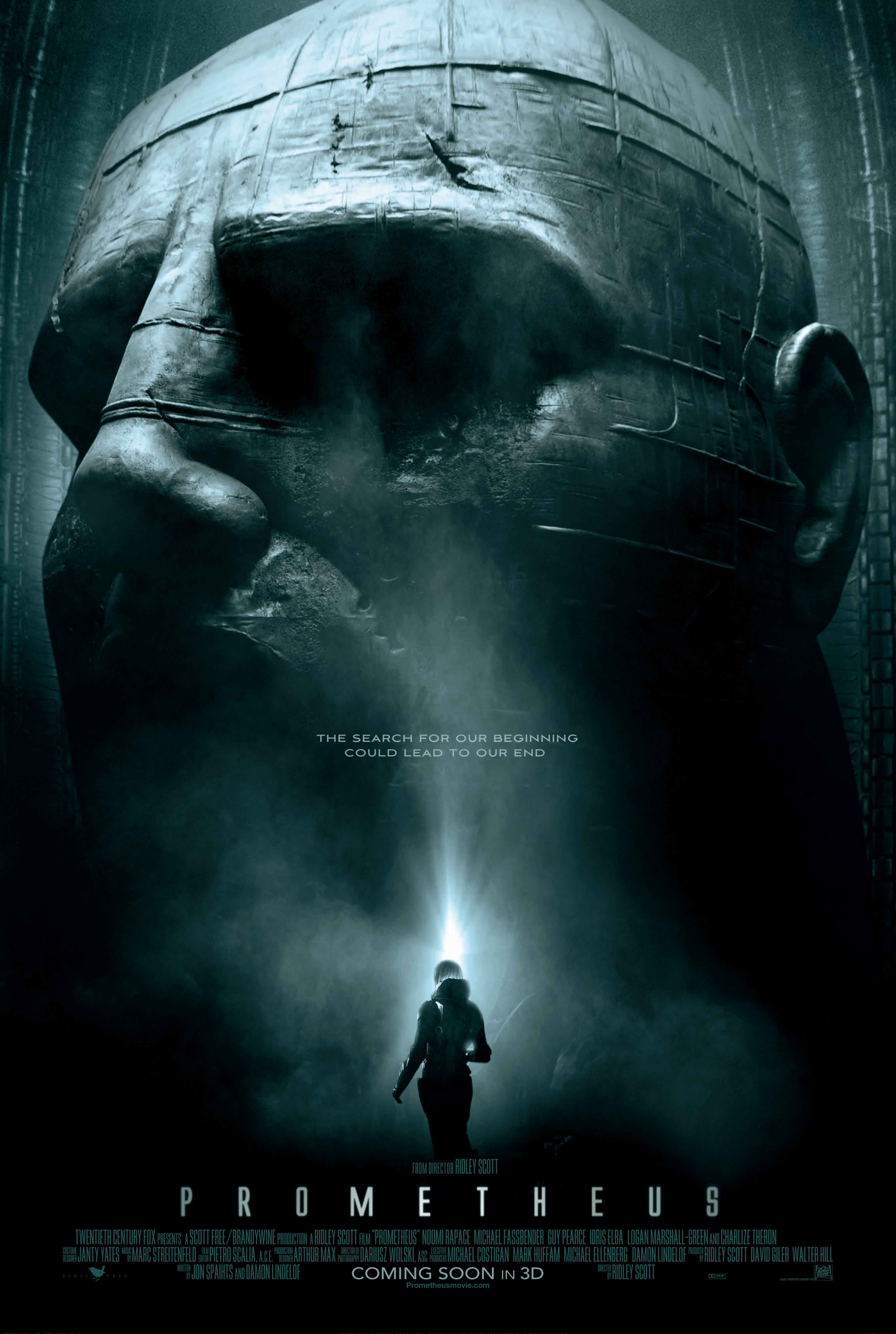
Holloway’s desire is to ask the alien-gods the meaning of life. This goal is utterly unobtainable, and the film establishes elsewhere that life has no inherent meaning (existence precedes essence) and, even if one could speak to the alien-gods, the message would be something unsatisfactory like 7*7=42 or horrific like Event Horizon’s ‘we don’t need eyes to see’.  
SMG on Prometheus
Especially in art. There is only the superficial.
One should thus invert the usual opposition within which true art is “deep” and commercial kitsch superficial: the problem with kitsch is that it is all too “profound,” manipulating deep libidinal and ideological forces, while genuine art knows how to remain at the surface, how to subtract its subject from the “deeper” context of historical reality. 
Zizek
So you're peeling back the layers of the onion. On the first layer is "different colored text, and sounds like Dave," and the next layer is "uses video as a climactic way to broaden the scope of the work." And in some ways that next layer can be more useful - in this case I think it explains affinity between these two works better, and offers a more reliable predictor of what else fans will like.

But it's still layers of the onion, and you'll never reach some inner kernel of pure meaning. You can never guarantee that you have found "what audiences want."

To address the original analogy, you could imagine some start-up entrepreneur who laughs at the cargo cults of Pacific Islands, and thinks the real idols you need to worship are the global supply chain, and synergy, and strengthening the free market. Now they might have a practical understanding of how to build their company, or they might just think that if they say enough buzzwords then investor capital will be drawn to them and they will get rich.

Monday, May 15, 2017

Quel Innocence


@mugasofer asked: I would be fascinated to hear you defend this claim.

***

It's just the Tree of Knowledge in the Garden of Eden. Or Zizek's favorite metaphor, Wile E. Coyote, which is the same thing.

***

(Okay, besides the last line about happiness, which is just a dumb platitude that attempts to mystify what makes people happy.)

What really works about Zizek's pop-philosophy writing style, is that he will give some very common everyday occurrence in normal life that is pretty weird when you think about it. Then he will give a psycho-economic explanation for it, based on Lacan or other critical theorists. This only works if you already empirically agree that his everyday example happens; it does not work for proving to you that such things do happen if that is not your experience.

In this case, he uses the example of "lovers who do not yet define their relationship." Are you flirting, are you dating, is this an affair yet, is this a relationship, all those ambiguous phases. Certainly in my experience this is a very common stage of most relationships. (For all the mockery the "Left Behind" novels get, they are an excellent depiction of the American Evangelical worldview, including the main character having just this sort of "undefined flirting" with the femme fatale.) Either you agree that exists as a phenomenon, or you don't. If you don't, I can't help you.

And the thing about these undefined lovers is that not only do they defy traditional answers to "what are you to each other," but they usually rely on not even asking the question. You can not even discuss "So, are we dating?" without it suddenly becoming awkward. See this parody from Reductress. The problem is not solely the labeling of the relationship, but even the consideration of what factors would determine the label. The magical moment of the new relationship relies on not questioning or even thinking about "what are you," but just going along with the ride.

This is the natural contradiction and mystification of ideology, where you can go along happily so long as you never ask the hard questions that challenge the ideology. We were just talking about progressive ideology's unwillingness to ask the question "which of our myriad causes is the most important?" or you can look at Republican ideology's inability to draw the line "how far would Trump have to go before you abandon him?"

This is our favorite coyote, who can run on air so long as he never notices. The minute he looks down, and becomes aware of his impossible state, is only then when he succumbs to gravity.

The concept of "innocence" is similarly highly ideological. Innocence is not just "the lack of doing evil" but lack of awareness of the possibly of doing evil. That is why a child who sees a brutal murder is "robbed of their innocence." Or if someone is offered sexual favors, there is no "innocent" answer to it - they must suddenly consider whether they want that or not, and in doing so they have considered sex, and have entered maturity. (Or as we know, the truly innocent answer is to be so naive you don't understand the offer, and continue on blithely.)

This is why the Fruit of Knowledge destroyed the Garden of Eden. Because once Adam and Eve then had the choice between Good and Evil, once they knew Evil was a possibility, then they could no longer exist in a state of innocence, even if they chose Good.

We can see this Garden of Eden at work in most lively communities. A community floats on the magic of never explicitly defining their rules and boundaries. They might have some very loose ideals, or even a few rules made by geeks who enjoy that sort of thing, but it's still usually an open question of enforcement, and a million possible edge cases that no one wants to deal with. For instance, the comments section of a popular blog: the blog might enjoy proclaiming "Free Speech" and so declare a principle of anything goes in the comments, yet any blog that has done that and gotten a following has found that there become a lot of things you want to censor after all (for instance: commenters who harass other commenters for expressing the wrong opinion.) The blog author might vaguely know it's a possibly problem, but they hope it doesn't come up and they avoid thinking about it, because that's not the spirit of a fun-easy going community.

Once the harassment, and spam, and the desire to minimize disproportionately represented viewpoints, actually happen, then the leader(s) of the community have some very awkward decisions to make. And while some answers are worse than others, it is the mere experience of having to debate those questions that destroy the group's innocence. Things are now less fun, and more stultifying, until you find another community. And that newer community rarely has "found an answer" to these awkward questions, so much as it is once again a place where you can pretend you don't need an answer to them because the problem hasn't and never will come up. Thus continues the cycle of TAZ.

We should of course reject this form of innocence, willful ignorance of possibilities, and the attempts to float past ideological contradiction.

Thursday, April 20, 2017

Just Language

Neil uses the term Lacanthropy to describe “The transformation, under the influence of the full moon, of a dubious psychological theory into a dubious social theory via a dubious linguistic theory.”


Which is a fair assessment of the bad opinion most well-read people hold of the works of psychoanalyst Jaques Lacan. Lacan had some bold, un-tested theories of the mind, after all. But what he, and the other mid-century French existentialists, was really obsessed with was “semiotics” which was sort of like linguistics but was more about “how symbols worked.”


Language was a system of symbols that worked, whether you understood what the word meant correctly, or believed in it or not. It was separated from your mind and intent, and yet, words certainly have a life of their own that is coherent and sensical. They fit into a broader system, one which the speaker may be utterly unaware of.


And since we don’t have access to each other’s inner minds, all of society can best be understood as the emergent effects from this substrate of language.


In modern parlance, we would talk about how memes can spread across twitter, independent of whether you are RTing them ironically or seriously or double-reverse-ironically, the meme doesn’t care it just spreads under a logic of its own. Then CNN reports on the meme and how many times it’s been RT’d or mutated and asks “what does it all mean?” Words are just more fundamental memes that way.


This means we are not interested in what the word means, what a dictionary says about a word or what we think when we say it, but about how it functions. What does the word do.

***


When I was young my father advised me to avoid the word “just” when talking about myself. Look at these two sentences:
  • I was trying to help.
  • I was just trying to help.

They mean pretty much the same thing. But the function of the second sentence serves to limit the conversation to my intent, delineating it as the only relevant thing. (Common parlance would be that it’s “defensive language”.)


The literal meaning of the word “just” does not capture what is going on here. But neither does appealing to the intent of the speaker, accusing them of some cowardice or malice based on how they used the word. They probably meant it innocently, or just do not consciously parse every single word for how it will come off.


What matters is what the word has done to the conversation, attempting to limit its scope, and positioning any resistance to limitation as a conflict now. That was the function of the word.


I did not take the simple advice and never use the word just from then on, but rather whenever I am about to say “just” I think for a second. Do I really mean that? What is the difference in effect between the first sentence and the second sentence, and which do I prefer?


This is what it means to study how a word functions, independent of the intent of the speaker. Or as the anti-crit crowd says “Death of the Author”. The broader system of how all these words (and symbols and memes) function is semiotics.


People from all over the political spectrum continue to use the term “SJW” despite it’s extremely insulting origins (and vague boundaries) because, well, it delineates a group that’s useful to delineate, and the usefulness of the word is more important to the semiotic system than the purity of its definition.


Or you might have heard the quip about ideological debate: arguments are like soldiers - you don’t stab them in the back. This acknowledges that it doesn’t really matter whether an argument is true or ethical, just whether it is serving the function, of helping attack the other side.

***


Let’s look at insults for a minute.


Most of you read the twitter post and tumblr commentary when some transactivist threatened Caitlyn Jenner that if she continued to support Donald Trump, activists would go back to calling her “Bruce.”


It was mean. And also a little boggling. Doesn’t the activist, as part of social justice doctrine absolutely believe that Caitlyn Jenner is a woman? Isn’t that the exact belief system they are fighting for? Unless you have some really weird epistemology where anyone who votes for Trump is definitionally male, the insult seems only to invoke “if you do not support the cause, we will not support your gender identity.”


As a factual belief, it is a complete hash. But as a threat, it’s pretty clear. And certainly as something that hurts Caitlyn, it’s utterly plausible “Your self-respect as a woman is always conditional on our political support for you. You’re not independently and authentically a woman.”


This is all extremely effective even if it’s completely non-credible that the speaker believe it. Even when the listener considers it factually untrue with zero doubt. What matters is “what the insult is doing.” There are fears we have, and the insult is touching on them to create pain and panic.


More prosaically, anyone reading this should not believe that being overweight is an accurate measurement of their moral character, worth as a human being, or virtues in any other field. We all just know this, and don’t think someone is bad because they are fat.


And yet, if you have a friend who is overweight (or just not the magazine cover image of thin), even a friend who knows everyone in their social group doesn’t judge based on weight… holy shit is insulting them over their weight devastating. Maybe you would do it ironically, or maybe you’re really drunk, maybe they misheard a word you said (you meant phat!), who fucking knows. It doesn’t really matter what you meant by it, or what you really believe… you have channeled the threat of the Big Other judging them into this insult.


This is true for most offensive insults: racial stereotypes, accusations of being a sexist, your lack of intelligence, your pretentiousness, a slur about your sexual orientation. We get upset at them from the enemy, we get upset at them from a stranger, we get upset at them from a friend for whom we have overwhelming evidence that they do not believe this.


(And even if they do believe this, why is the insult so bad? It’s much better to get the toxic belief out in the open and deal with it, than to let it lurk. And why would a second insult be bad after that, once we know they disdain us? Instead we strongly want them to keep insults to zero or a minimum. Because the function of the insult, ie a social attack from the Other, has not changed.)


And it’s important to note that even if in individual conversations an insult’s power may be limited and dismissed as not particularly upsetting, on the internet people like clicking on the posts about witty insults or passionate denunciations of them. So the insults get shared. And once they are leaping across the reblogs and hate-shares then they have an independent, one-dimensional life of their own.


(Mein Gott, am I tired of well-intentioned critics like Freddie deBoer agonizing over how every liberal only makes simplistic or navel-gazing arguments. No, people make all sorts of arguments, including thoughtful ones, or factually-rigorous ones, or just compassionate ones. What gets shared are the simplistic in-jokes and denunciations. The problem is not the people, it’s the system their words are evolving in. If there were not capitalistic pressure for outrage and glib quips, then @theunitofcaring would be most popular blogger on the planet after all.)


***


So for instance, the eternal debate about whether some liberal is “racist towards white people.” The denotation of racism is pretty clear about this (and it’s weird of a movement that insists it is fighting privilege and classism, to so often fall back on “well you should know this is what academics mean by that word.”)


(Or if we are coming from the other direction, liberals who say you are racist for discussing whether it’s okay to wear certain costumes on Halloween, or because you’re a low level admin for a company that has an all white boardroom, or because you made an awkward television ad.)


And yet, if we are talking about the word racism does, it’s function is to refer to a system whereby the powerful simplifies and denigrates the minority. “Racist” is usefully pointing to someone who defends this system.


Our attitude towards “a black person who says all white people dance funny” or “that bro with dreadlocks” is simply not the same as it is towards Jeff Sessions or Jefferson Davis. The word racist best functions as a rallying cry against gross defenders of the racial hegemony.


When you see these words as more building blocks in the system of language (and less, reflections on what the speakers internally mean) then it’s easy to see how they form a web that has certain patterns and rules.


Exiling someone with the argument “We don’t support racists” is of course non-sensical as a factual statement based on any thoughtful definition of the words involved. You could attack that argument from a dozen angles after all -- but it’s a very effective meme at silencing debate, isn’t it? No one publicly really wants to be on the other side of that argument (at least, no one polite.)


Similarly, all the problems the rationalist community has had with terms like virtue signalling and motte-bailey. They do define relevant concepts. But the use of such terms is “a phrase to dismiss whatever someone just said without interrogating its truth.” And so even though there are correct definitions for the terms, bigger blogs have just stopped or banned using them altogether, because they just end conversation.

***

I continue to be struck by the dynamics of “relatable content” from this article on tumblr wunderkinds I shared some months ago. And of course, how similar it is to Freddie talking about the behavioralist posturing among online liberal writers who consciously know better. (Go read them. They’re both quite good.)

Contra a simplistic interpretation of my previous post, words are not just memes following transmission vectors, they remain a way for intelligent beings to convey ideas they have generated.

But there seems a contrast or trade-off here. Sometimes words act more like mindless memes, and sometimes they serve as a way to express a complex idea, even the truth.

It’s easy on any social network, but especially tumblr, to become obsessed with how far your post travels. What’s the reaction to it, how many reblogs have showed it to others, how many people liked it, how many new followers did it get you. And it’s clear why instrumentally, reblogs and followers help spread your “good ideas” even more.

But anyone who has spent some time writing here has been struck by the vast and arbitrary difference between posts that go viral, and ones that get a single like or two. You can write pages of effort post, and get no response. But you’ll forever be known for the 100,000-note post about what you texted at 3am last night. @balioc writes beautifully about how to craft our identity in a banal and hostile world, post after post, but gets linked by a big blog for his one off comment about campus politics.

If you want to Make An Impact with your ideas, it can be very frustrating. You want to spread your new, brilliant ideas to as wide as possible an audience, but you don’t know how to phrase them to catch that viral wind.

And the answer lies in thinking about what “relatable” means. It means that many other people who see it understand it, as they had felt the same thing. Which, when you think about it, means… you aren’t actually adding anything new. That post about campus politics didn’t spread because you offered a new insight, it spread because people feel vague anger at campus liberals and you gave one more bullet of ammunition why they should, phrased in a way that also served their identity as puzzle solvers and empathetic thinkers.

The writing most likely to be shared like a mouse pressing a Skinner box, is well, the writing least likely to change people. It’s writing that doesn’t hook into the existing language system and follow the meme-winds to widespread recognition. The viral writing is writing whose qualities have the least to do with you individually.

Your writing has the choice between being part of self-replicating process, or being a lonely shout into the void, heard by many but repeated by few. That second sure is depressing, but in this light, it’s still a lot better to aim for than the first option.

Tuesday, April 18, 2017

Prometheus: Existentialism, Horror, and Simulation

Since the transformers.pdf went around recently, this reminded me that my favorite film analysis was by SMG on Ridley Scott's Prometheus. (paywalled link, but the relevant text is pasted below so don't worry.)

This is an insanely good thread about existentialism, horror, and simulation, which made me really appreciate the movie more and was largely responsible for my thoughts about horror and meaning (and of course my previous post on the movie.)

I've gone through the thread and selected the posts that present this analysis. It's very long, and you have to get used to the in-media-res of assuming SMG is responding to some argument without seeing it yourself, but it lays out the connections between film-making and how we define our own reality with clarity and wit. It's also incredibly arrogant and ungenerous to his interolocutors, but it's better to have an opinion strongly represented that lets the audience choose for itself whether and where it is correct.

Watching the film first is helpful, but not necessary.


Everything below here is written by SMG, who is not me. "***" separate different posts.

Monday, February 13, 2017

Time Travel Activism

After I’ve rambled enough at people about ideology, and anarchy, and communism, and universal love and acceptance, people ask “Okay Humanist, but what do you do about *real* problems? You mention preventing bad actions, but what does that mean outside the ideological system? If you love everyone and don’t cast justice on anyone, how do you stop all the serial murders and systemic poverty and potential global catastrophes, and that shit” Besides the problems that will whither away when fear and status are less strong - how do you prevent the monstrous, chaotic evil of an uncaring universe.


To which I say, watch a time travel movie.


When a protagonist has seen a catastrophe so bad they must go back in time to stop it, they act in certain ways. They are very very specific. They want to find one tiny thread that led to disaster, and stop it.


Maybe this just means telling someone “don’t do that”. Maybe it means hindering them, or even killing them. Maybe it means moving an inoffensive object at one innocuous moment, changing the course of history. It’s a limited change, but very dramatic and definite.


What do they not do? They do not “form a committee” or “raise awareness”. They do not accumulate their own power base. They don’t shun the person responsible or their works to keep their hands clean - if anything they engage with them as directly as possible. Those sorts of actions are very unlimited in scope, while being vague and ill-defined in their influence on a specific chain of events.


Sometimes the time traveller will for arbitrary reasons “not know” some key information, such as who the person they were sent to stop was, etc. This doesn’t cause them to give up or even change tactics. They must acquire that key piece of information, then again, act definitely. Or perhaps act on the tool that person will use, but still in a specific act definite way.


Think back to your own life, and disasters you’ve seen. Personal or national. Imagine you were sent back before one, and could prevent it. What would you do? How surgical would you be? It would probably involve a lot of yelling at a specific person to get them to change course, and that’s it.


If you are like me, it is very unlikely that your answer to that question resembles what ideological movements in practice do. They operate with less information, yes, but they are not even *trying* to be dramatically specific.


In fact, we can learn a lot from the time traveller. We admire their clarity of purpose. But they are also completely unmoored from society. They are well aware that everyone around them thinks that they are crazy but that doesn’t matter. Their judgment is obviously irrelevant to someone who has seen what they have seen.


The time traveller barely even tries to convince anyone. They don’t need anyone’s approval, so much convincing for our actions goes out the window.


And in a sense, the time traveller is acting completely without reason. No, without cause. For in fact the cause for their actions does not exist in this universe. They are a spontaneous ethical being, doing the right and necessary thing for no prior at all.


The time traveller is beyond class and status. They might remake the entire world, or they might just save one life, but they are laser focused on that and nothing else.


My favorite time travel hero is Ebeneezer Scrooge. He sees the Christmas Future and knows that a doom of loneliness is coming to him. And when he wakes up… he is filled with joy! He can fix things! He does not form a committee to see about this friendship thing, he immediately buys a goose and takes it to his employee’s family.


We can do this too. If something very seriously bad might happen, be as specific about it as you can. Act like it already happened and the details that led to it were realized. Then work backwards and prevent that very specific thing.


Free yourself of fear, status, alienated cruelty, and justice. When you do that many of the concerns that plague you will fall behind. Anything else you need to resolve: be a time traveller from the future to today.

"The role of the activist should not be to push history in the right direction but instead to disrupt it altogether. Žižek writes, 'this is what a proper political act would be today: not so much to unleash a new movement, as to interrupt the present predominant movement. An act of 'divine violence' would then mean pulling the emergency cord on the train of Historical Progress.' To accomplish this act of revolutionary violence involves a switch of perspective from the present-looking-forward to the future-looking-backward. Instead of trying to influence the future by acting in the present, Žižek argues that we should start from the assumption that the dread catastrophic event -- whether it be sudden climate catastrophe, a "'grey goo' nano-crisis or widespread adoption of cyborg technologies -- has already happened, and then work backwards to figure out what we should have done. 'We have to accept that, at the level of possibilities, our future is doomed, that the catastrophe will take place, that it is our destiny -- and then, against the background of this acceptance, mobilize ourselves to perform the act which will change destiny itself and thereby insert a new possibility into the past.' In other words, only by assuming that the feared event has already happened, can we imagine what actions would need to have been taken to prevent its occurrence. These steps would then be actualized by the present day activist. 'Paradoxically,' he concludes, 'the only way to prevent the disaster is to accept it as inevitable.'"


-Micah White, Notes on the Future of Activism