Showing posts with label modernity. Show all posts

Thursday, August 24, 2017

The SMG Gamergate Thread

In 2014, when the geek internet was blowing up with the controversy Gamergate, the forums at SomethingAwful.com were no exception. It was such a toxic subject that it was confined to one thread. SA’s resident communist movie critic, SuperMechaGodzilla, entered the fray – condescendingly lecturing everyone on capitalism, the fun of videogames, Christianity, anti-semitism, and media studies.

It was fantastic, and extremely educational. A point of view on GamerGate that was neither social justice totality, nor liberal/libertarian defensiveness.


His posts from the thread have been copied here for posterity.

Everything below here is written by SMG, who is not me. Posts are separated by quote bubbles, or an asterisk.


Tuesday, July 18, 2017

Life Under Polyamory Ideology

There’s a lot of… dialogue about monogamy vs polyamory these days, in our cosmopolitan little bubble. No one wants to tell others which lifestyle you should choose so I wouldn’t call it a debate, but there’s a great deal of defending “how your lifestyle works, and why you’re happy with it” that can’t save itself from becoming discourse about the two main options.

This happens enough that we fail to recognize that no, polyamory just won. We all live in its world now.


Or more accurately, we all live free of monogamous ideology now.


Case in point. I have a friend, and she’s monogamously committed to her boyfriend. Sure, she hangs out with a lot of other boys. She even visits them by herself, and crashes in their bed. She’s generous with hugs and other mild displays of physical affection to men. And she kind of pines after some specific men, wishing for greater emotional attachment. This isn’t even hidden, it’s all openly acknowledged. But, this is the definition of monogamy she and her SO have worked out.


The reaction of people from her social circle, the people from our general social bubble is “fine. Whatever works for the two of you. If that’s what you call monogamy, I have no reason to disagree with you.” There’s no call for us to try to strictly define what monogamy should mean for them.


Let me assure you, this is not how it would work under monogamous ideology. In a society where monogamy was the reigning lifestyle choice, it includes a specific definition of monogamy, and “being too touchy with other men” would definitely violate that. Even with her partner’s consent, she would be found guilty of breaking social taboos. (Which is basically how her non-cosmopolitan co-workers react.)


But none of us (which I assume includes most of my readers) give a fuck. Call yourself polyamorous, monogamish, what the fuck ever. As long as you both are happy what business is it of mine? And that is the true spirit of polyamory - anarchism towards society wide definitions of romantic relationships.


You might individually choose to snuggle with just one person, and hopefully can get that special person to agree. But it’s very different when that’s a private agreement between two people (one which can be altered at any time they want), than when it’s an arrangement coded and enforced by the whole social world. And we just don’t have that in liberal cosmopolitania any more.


After all, one of the main benefits of monogamy was that you don’t have to negotiate shit. You’re together, you’re just dating each other, these are the default rules, and for people who don’t want to process and explicitly lay out their preferences, this is a lot easier. But that’s gone now - any couple does have to figure out whether they are poly or mono, and even if they are mono, where they feel those boundaries lie, because ain’t no one else doing that regulating for them.


***


The point is not “be monogamous or be polyamorous.”
The point is that ideology is a society wide phenomenon, and it is not located solely in the individual.
Under monogamous ideology, not only were most people monogamous (at least publicly), but what monogamy meant and enforcement of following this code was a public matter.
If you live in a bubble where polyamory is accepted now, then you also live in a bubble where no one is defining monogamy for you. You can make up the definition of monogamy to fit your relationship. It can include “cuddling other people is ok but no sex”, or hell, it can include “having sex with other people is okay but we still call it monogamy because we want to” and no one is really going to criticize you for that.
Guess what. This freedom is new. It’s a result of living under polyamory, which exists outside just the individual.
(It’s also a burden. It means when you start dating someone, you need to clarify whether your relationship is poly or mono, and if it’s mono what those boundaries are. You can no longer just assume the default rules. Some people understandably loathe this.)
Transitioning from “the rules of my romantic relationship are defined by the social structure around me” to “I get to / must choose the rules” is a big step. But it’s a culture-wide step, and can’t exist solely on the individual level, anymore than “I decide to have private property” is a decision solely by the individual. Both need the social structures that support them.
There’s no escaping this. It’s not saying “polyamory is an ideology yay”, but rather “your society is going to have an ideology about how much freedom people can expect in defining their relationships.” This has always been true, and will be true in the future.
You can say “FUCK OFF I’M NOT POLY” all you want, but I bet if your partner cheats on you none of your friends are going to immediately tell you (at least, as compared to how likely they were to under monogamy), because that’s now your business and not theirs to enforce. This is the anarchy I am talking about.
(And obviously, the current polyamory acceptance only exists in a few very specific bubbles, and monogamous ideology holds sway in most of America and the world still.)

***

WW: Partners were already non-monogamous unless that was specifically defended, the difference is now everyone knows about it.
Obviously.

One of the key things about ideology is that it’s a public performance. With any of these beliefs - monogamy, social justice, Trumpism, rationalism - everyone says in private “oh, I don’t believe all that stuff. I don’t go that far, I’m just reasonable about it. It’s other zealots who actually take this seriously.”

A communist experiences himself as simply an instrument whose function is to actualise a historical necessity. The people, the mythic people - whose instrument the totalitarian leader is - are never simply the actually existing individuals, groups of people and so on. It's some kind of imagined idealised point of reference which works even when, for example in rebellions against the communist rule like in Hungary '56, when the large majority of actually resisting people raises up, is opposed to the regime. They can still say: "No, these are just individuals, "they are not the true people. " When you are accused of: "My God, "how could you have been doing all of these horrible things?" You could have said, and this is the standard Stalinist excuse: "Of course my heart bleeds for all the poor victims, "I am not fully responsible for it. "I was only acting on behalf of the 'Big Other'". "As for myself, I like cats, "small children", whatever - this is always part of the iconography of a Stalinist leader.  

- Zizek, Pervert’s Guide to Ideology

So yeah, in private lots of people have been functionally polyamorous. But they still had to present the public face of monogamy, and would effectively enforce this. This is like the dozen Republican leaders who decided to try Bill Clinton on impeachment, when privately every single one of them was engaging in adultery or worse.


(This does not obviate that many people are not fucking around, and still have and have always had one partner. It’s just the transition from a system where society codifies and enforces that one-partnerhood for you, to one where you must manage it all yourself, is a big and real step that has happened.)

Monday, February 13, 2017

Alienation

@jadagul asked whether their lack of feeling alienation led to a qualia gap that made it hard for them to appreciate a lot of social analysis and social preferences. This seemed like a good chance to discuss “What is alienation?”
First off, someone asking me what about if they don’t experience alienation makes me feel like when Maslow would get letters from people saying they are self-actualized so what should they do next. https://twitter.com/existentialcoms/status/812394889295974400
Most of my writing is based on this premise: If you are happy, and you think your life and role in society is going along well - great! I have no desire to convince you that you are wrong. I want more people to feel like you, and I want to figure how we can help get more people there.
But I believe that most people writing thousands of words about politics on tumblr dot com are actually deeply unhappy, and their attempt to change the political Discourse is reflective of a belief that things are not working and a compulsion to try to fix them. I certainly feel things are not working, and so hopefully my thoughts can help me and others be in a place where we do not feel this unhappy anymore. Maybe this requires worldwide revolution, or maybe just a change of our state of mind, a lot will depend.
(I should possibly note at this point that I do not believe in the Discourse, and think that it is a modern day God-replacement for most of its participants.)
But anyway, alienation. It probably gets overused in the social context, because I think it’s most useful in the economic sense first (after which we can see how the social is the economic.)
The cliche criticism of communists is that they are lazy and do not want to work. This could not be farther from the truth. Work is great. People want to work. They want to spend hours upon hours producing something they care about. Maybe they cook for their friends. Maybe they manage spreadsheets for an intergalactic empire. Maybe they dig up a bed for their garden. Maybe they write brilliant social analysis for tumblr dot com every other night. But regardless, often the things people love the most, are things they love working for.
In all of these cases though, there is a connection to the product of the work, that the worker takes pride in and that leads to them to care about the details of the work. You care that the meal tastes interesting when it’s for your date. You lovingly water each flower knowing you can look out on it when you get up in the morning.
Capitalism is a system of economy where instead of working to make your food for the day and building your own house, you receive wages you can buy those things with. You get wages by doing a particular job you are good at, over and over and over again for an faceless entity. That entity chooses what work it wants you to do based on what maximizes arcane and distant capital for the ownership class. (Capitalism is also the ideology that defends this economic relation.)
When you don’t do this work for yourself or something you care about - but instead just on the orders of some distant not-you, it gets a lot less fun. @jadagul is a math teacher, so I’d say it’s like going from making a lesson plan for your students, who you know the strengths and weaknesses of and whom you are so happy to see grow, to deciding you’re really good at lesson plans, so you just crank out lesson plans 10 hours a day, for other teachers to use in a one-size-fits-all solution for their students. You are now alienated from the product of your work.
Because fulfilling work is fundamental to human happiness, this separation from enjoying your work is of immense moral importance. (Of course, capitalism might be using people to create things much more efficiently than they would be as individual units doing a little bit of everything, but the economic analysis of those benefits has to wait for another post.)
Instead of doing the work on your schedule, or improving it based on your own observations, or switching between what projects you feel like, you’re answering to a boss who tells you when exactly to work on what and in what way and monitors you for any unauthorized deviation. It is miserable.
So alienation comes up a lot in analyses that notice “we’re doing the things we’re supposed to be doing… but this just really doesn’t seem enough. We in fact hate doing these things.”
And then this relates a lot to all social interactions. It’s not a misnomer that some social maintenance is called “emotional labor.” But that’s because labor is supposed to be joyous just like social interaction can be joyous (aka friendship.) If you are doing the tasks of friendship without actually connecting with the friend and valuing the work, then it’s just as soul-killing as flipping burgers 9-5.
And we really really want to get away from our work - material and social - being a fucking job we do for distant forces and unchosen obligations.
One of the many reasons we don’t want this is because all that we are producing is for some one-size-fits-all factory line instead of crafted specifically to what we need. So what you buy sorta looks good in your home, but not as much as if you made it. And the social rules you are handed down to follow sorta work, but aren’t a replacement for having a genuine connection with the people you are trying to help. (Hence, as Ozy points out https://thingofthings.wordpress.com/2016/12/27/secondary-is-a-really-broad-word/ , so many advice columnists have this very generic romantic advice that is probably useful to many people but doesn’t actually say anything for your specific situation and partners.)
So discussion of alienation, both at our job and socially, is discussion of “how is this rote repetition of certain tasks killing us inside, making us very unsatisfied with the way society works, and producing more and more stuff (material goods, and social rules) with less and less benefit for people.”
If some people are actually happy with this state of affairs, that really is great. I can’t really tell them what to do, or how they should analyze society (I do not worry about truly happy people being oppressive, so really, they can do whatever they want.) But I’m pretty unhappy with alienation from my labor, and I think a lot of the bloggers I read evince problems that flow from that as well.

I'm in the Hall of Mirrors and There's Too Much Red

Not my fault for wearing my favorite red shirt.

I was reminded of this during punching discourse (where multiple different perspectives would say “but I see nothing but X”) and reading this post about pretending you don’t know who Zizek is.
(Someone reading my posts asked if Zizek actually was a dude people knew, or just some obscure figure I and I alone talk about.)
I’ve said before I don’t worry about the “bubble” as a filter preventing us from hearing the facts of the “other side.”
But I do worry about this Hall of Mirrors effect. With the power of social media, we can choose to follow a lot of people who have said things we find witty, insightful, and reasonable. It’s a big world and there are many such people, enough that you can weed out people with fairly different opinions, and still have a lot of content to consume.
But our mind doesn’t stop and check “okay, you’re only sampling from the people around you,” quite as much as it should. One effect of that is presuming victory on your side, that everyone must agree with you, but in political tactics battles we at least think to balance that with pessimism, and some (quasi)objective standards. Ie, have you seen what the polls say?
Where this becomes a real problem is the complaint of overhyping. Omg everyone is talking about Zizek and looks down on people who want to punch Nazis! Zizek must be so overrated, and maybe my political side is a hivemind.
And then you check with a friend outside your little hall of mirrors bubble, and they say “funny, I don’t see any red at all.”

What is Hell?

This is totally my favorite comic for explaining what utopia looks like to me:
Most humans can (and have) lived with pain, illness, and facing death with some level of acceptance. What causes us real misery tends to be unfairness, and negative opinions from other people. It’s possible I am drastically mis-weighting human priorities here, but these are at least my intuitions, and I can’t get more fundamental than that.
I don’t just mean this appeals to me (though it does). I mean if we picture a rich man who has all the luxuries of high capitalism but suspect most people hate him, and we compare that to someone who has very little, and is even ill, but believes in the love and respect of the people who matter to him… which one do we think is happier?
On the flip-side, when I think of “Hell”, I don’t think of how you can pile the most physical pain onto a person, or other forms of singular anguish (like the obscene agonies listed in Unsong http://unsongbook.com/interlude-%D7%99-the-broadcast/ ). I think of being misunderstood and judged poorly, on a massive scale.
In fact, instead of weird paradoxes with “your body is burned every minute but also regenerates so you can keep being burned and also your nerves never develop any tolerance to the sensation” in such a Hell your safety and physical homeostasis would be guaranteed, so you can go on experiencing the psychological turmoil without distraction for as long as possible.
There would also be a lot of communication.
I mean, a lot.
How much communication can there be, you may think. After all, talking with people 24 hours a day is only a very finite amount of communication. But a long conversation is really only one datapoint of “what someone thinks of me.” It packs a stronger and more complicated punch than a one-liner, but it’s still only one punch.
As our communities have surpassed our Dunbar number  our brains have failed to adapt to the idea that “what one person thinks of us is no longer representative of what 1/150 of all people we will ever interact with thinks of us”. A random stranger still packs more psychological punch than they really should on our mental equilibrium.
So it’s not “having a conversation all day” but rather “reading what people who aren’t close to you have written about you” all day. You can read (and scan) a lot faster than you can converse, so this is more efficient.
You can see how larger villages, written letters, the printing press, newspapers and letters to the editor, internet forums all over time increased the number of people we heard opinions from. In many ways this made life richer and more interesting, with greater opportunity for human connection and emotional validation.
But the opportunities to be told that you are a failure, a pig, wrong about something, or a supporter of something immoral, also grew. Even though these insults were *usually* irrelevant in terms of anyone’s ability to affect us directly, our brains still interpret them as valid social threats, and so our sources of anxiety increased.
(The fact that a random insult *might* cost you job prospects or lead to physical harassment helps keep the edge on such insults of course. 99% of the time it won’t matter, but you’re free to obsess about the 1% of the time it will.)
Then social media hit.
***
We used to think the future of communication was richer communication. We’d use videophones for every call, and eventually there’d be hologram-phones and who knows what else and people would download entire libraries into their brain. Better invest in high bandwidth infrastructure.
But it turns out the direction of communication is _cheaper_. The real success came in Facebook where a one-line status update can take only seconds of effort but be broadcast to hundreds of people you care about. Twitter did this even better by *enforcing* a maximum level of effort at 140 characters.
We all know that such very small chunks of information can not convey the complexity of our emotions, or all the details of our opinions. But getting out that one witty bit of information is better than nothing, right? And the returns to scale were just so amazing.
“Bit” of information became literal as our way of communicating with someone was just whether to like/upvote/favorite someone’s post. It’s the cheapest method of all, and incredibly addicting to both send and receive.
(Make an account on reddit and next to your name is your goddamn score, of just how many people have ever liked your posts. It’s like these people read textbooks on how to make humans anxious. It can make the most hardened social isolationist ponder how to make that number higher.)
And because all this communication is easy, it can be read out of context. Was that line you said about wanting to do violence to a political figure sarcastic, very serious, or ironicly imitating how others talk? In a re-tweet those distinctions are impossible.
Imagine what it was like to be Justine Sacco http://www.nytimes.com/2015/02/15/magazine/how-one-stupid-tweet-ruined-justine-saccos-life.html who maintains she was making a sarcastic joke about the nature of white privilege.
With omnipresent social media, everyone will be Justine Sacco for 15 minutes 
outrage
15 minutes? I’m kidding. People will probably only think about why they are angry that you upvoted that ironic comment about controversy-of-the-day for 15 seconds, at most.
They’ll do it because the communication is cheap. There were a lot of things you said, and taking one out of context was an easy way to embarrass you. They’ll do it because expressing violent disagreement with you takes 140 characters or one click.
But it will be billions of people downvoting you, sending you inflammatory tweets, and offering glib takes on your faux-paus that you have no power to respond to. While the world has moved, perhaps even expressing sympathy for you about the public’s “overreaction”, you’ll still be reliving memories of the time “everyone” (read: one-out-of-ten online viewers) judged and harassed you.
I’m not exaggerating. This is why outbreaks like GamerGate or Sacco are so devastating. It really might only be a minority that is upset at you, but our brains simply are not set up to understand “a million people saying mean things about me is not representative of the population at large or people close to me”. And once everyone splits up into different ideological camps, that means everyone might say something at least some group hates.
Once you think about that, the heaven in the comic sounds pretty good, doesn’t it?
***
“Okay, okay,” you think. “I’m just not going to get into social media then. Or if I do, I’m not going to tweet anything controversial. This dynamic sounds really sad for those people who feel a need to post on social media, but the obviously wise position is not to.”
Maybe. I worry that won’t be an option.
Even now, when outrage cycles explode, their participants often demand people in their circle speak up and can’t be silent. See the Toxoplasma of Rage  (the relevant section is Part V, though it’s all pretty good.)
friends if you are reblogging things that are not about ferguson right now please queue them instead. please pay attention to things that are more important. it’s not the time to talk about fandoms or jokes it’s time to talk about injustices.
This is a limited dynamic… but it’s not hard to see a world where social-media silence is just as critiqueable as a misstep (in fact how often do we mock politicians for not addressing controversial issues enough?) Maybe your silence on an “important matter of the day” will become a source of harassment, be it from friends or people who don’t know you and how you express yourself.
Plus, this world is still capitalism. We still need jobs. Now, the vast majority of jobs don’t require a social media presence… but some do and that sector is growing. You gotta get your brand out there, and by being popular online you can direct people to your work. Already most jobs demand you “sell” yourself one way or another (to potential customers, or donors if you work at a non-profit, or just to the professional community you are in so your employer has “buzz”). The more ubiquitous social media is, the higher the expectation will be that you actively participate in it.
I hate the current cycle we put new journalists in. In order to “explode” onto the scene, they basically have to participate online and drive people to their articles. Inflammatory language that goes with the crowd is the best way to do that. And then one day the journalist crosses a line, and everyone demands they be fired.  No one ever questions how many hits your employer got for your “combative” online style before the explosion. It’s the online equivalent of a Wall Street boiler room that demands you make your sales quotas, looks the other way for how you do so, and then is "outraged" when they find you were misleading investors.
So yeah, I see that system infecting almost any job. You probably won’t need a social media presence to get the most basic job… but if you want a good job, if you want to be very "successful" at it (and viewed as successful), you’ll need to be out there generating buzz for yourself. So you can amend my terrible prediction to “this will only happen to people who care about professional or social success.”
Still pretty bad I think.
(Plus, what you thought was private communication might turn out not to be.  )
***
Let’s talk about the Singularity. It’s the technological utopia where we are all hooked up to the computer grid, with no bodily needs. Everyone is immortal, no knowledge is lost, and communication is universal and free.
It’s dismissed as a geeky pipe-dream, by the likes of Peter Thiel and other technology obsessed quasi-libertarians. I think it is extremely realistic and likely, if current trends in our world continue (and we don’t get hit by a meteor as President Trump launches missiles at China in order to distract from global warming).
Communication with everyone? Haven’t we just learned how dangerous that is. You’ll think “that’s a pretty supernova” and it will upload to your twitterfeed without hesitation. A billion people will immediately downvote you for being distracted and thinking about something besides the controversy of the minute or for idealizing superficial appearance. A billion people will harass *them* for not letting the poor girl enjoy a simple pleasure for just a little bit. Both of these will happen almost involuntarily by all the participants, but as natural as breath.
(Oh, you don’t want to hook your thoughts up to a live twitterfeed? Well we respect your privacy, but really, what do you have to hide? We’re very accepting of all people here, just so long as you don’t have any toxic beliefs. Look I don’t know if we can hire someone to the position of Artist in Residence if we aren’t sure you aren’t a cyber-classist. In this depressed economy, there are plenty of other desperate graduates we can hire instead, who make clear where they stand on the principles we find important.)
Now, such utopians think that without the threat of material deprivation, our anxieties about judgment will go away, and we will all stop being assholes to each other. Everyone is immortal in the computer grid anyway, so there’s no more competing over food or healthcare or possible imprisonment, so we can just stop being afraid about what others think about us.
I don’t think that’s how the human brain works. We can investigate the failure modes of this Singularity just by looking at the results of the intermediate steps.
  1. The internet and social media already have much less impact on our physical well being than in person interaction. And yet we still twitch extremely hard in reaction to judgments there. Our reactions are not based on practical analysis of the consequences, but how our brain directly interprets social signals. 
  2. There will always be material inequalities. Maybe in the cybertopia it’s about how good your processor is, or how much of some fuel you get, or maybe it will be based solely on labor you get from other humans. But even when we as a society *can* provide everyone with the basic necessities of living, we don’t for a variety of convoluted explanations. The Singularity could easily be like America - with most people having a basic material standard of existence, but much deeper insecurity about how it might get disrupted if any catastrophe happened to them (such as a storm over your tweet’s ironic lack of enthusiasm in the war against cyberAsia). 
So I don’t think the Singularity is a fantasy of fools. I think it is Hell (still, of fools). It’s our current capitalist anxieties driven to the most extreme - where we are constantly performing context-free actions hoping to get validation (and reddit points) from others, afraid of what happens if instead are publicly convicted of moral crimes we didn’t intend. And there will always be a publicly viewable number ranking how popular your speech is.
And you can come up with all sorts of legal rights to prevent this. But what does legal privacy mean if millions of people can demand you open up, or else you won’t be as competitive in your professional field as those who do? Where do your minority opinions go when masses are chanting “freedom of speech is not freedom from consequence”?
If you want to see cosmopolitan Hell, just take any trend from the past 10 years and draw a straight line.
***
This is all to say a couple things.
One, is that I am _really, really_ skeptical of material progress in human conditions without adjustment of the social and economic systems we take for granted. America by most any standards is living in a material abundance, and we Americans are very unhappy. It’s more than easy to see how that continues, no matter how good technology gets.
Two, social media and how we use it comes up a lot. I think specific systems of it are pretty bad for us. I don’t think “willpower to not use them” is a good fix for the system exploitation inherent in it.

Warcraft: Right of Exit

A political conversation I’ve seen since childhood, and going on well before that I’m sure, is how much various under-performing people should be tolerated. In the past, a conservative of some sort would say that schools are too easy on kids, and don’t push them harder, like you would find in the military or at a real job. More recently we see cultural liberals saying the same thing, about the sort of “tough love” that should be shown to violator of the social contract (particularly with regards to racist actions or harassment.)
And the obvious rejoinder was always “Well yeah, schools don’t do that, they can’t kick people out. They’re stuck with them. So they have to do the best they can to encourage these people to improve, instead of threatening them with expulsion.”
(Okay, schools clearly can expel people, but only in dire circumstances. It’s very different than failing to meet your quarterly performance targets.)
And so schools treat their students differently. Yes they can enact harsher in-system punishments than any job where the worker can just leave… but they also need to avoid a confrontational dynamic involving, and so will be less interested in ever
It’s interesting how World of Warcraft has mirrored this split with their dungeon groups in the Legion expansion. As discussed before, the basic heroic group is random strangers thrown together, who can vote each other out if someone is a problem, and if the group fails, they can just queue for another one quickly. This is the LFG, and is similar to modern social commodification.
In Legion they also added a Mythic system, for truly hard version of dungeons that you are trying to beat under a harsh timer. In order to even run a Mythic, you need to spend a “key” attuned to a certain difficulty. If you beat the dungeon under the timer, you key replenishes and it upgrades to a harder level – but if you fail the timer, you still get loot, but your key is depleted. This creates a lot of pressure for everyone to perform quickly and reliably in a dungeon, and to communicate even less due to the time constraints.
And, you can’t get rid of anyone. If someone disconnects, or just trolls you, you’re screwed and you can’t finish the Mythic. Your key is used up, and that may have been your one chance to run this sort of content for the week. That can really suck.
And what does this say for harassment? If someone is taunting you and saying crude slurs and being horrible, now you can’t vote them out without giving up your own run as well. So there’s now a much higher bar to object to in-group harassment.
You would think then, with the pressure and the inability to get rid of harassers, that Mythic+ culture would be a lot more hostile and unpleasant.

But it’s not. It’s a lot calmer. The other night we had a pick-up member join our group, who just went Away From Keyboard for five minutes in the middle of the run. In LFG, this would have gotten them booted, and cursed out. But in Mythic, what even was the point of complaining? Your group couldn’t get rid of them anyway, so there was no point in creating social pressure to remove them, so there was no performative anger. Just resignation and pushing on. The guy eventually came back, and we completed the dungeon just five minutes slower.
That’s a somewhat extreme example. But do you have a damage-dealer who does very little damage (compared to what you think they should be able to do?) Do you have a tank that pulls less quickly than you’d like? Well that’s a pity but your only option is to give up the whole run and your key too. No amount of social shaming will get the group to get rid of them.
And so there’s no escalation. There might be some casual complaints… but they don’t feed on each other, into a war of words where two people are trying to convince everyone that the other person is a troll and a liar and a burden on the group.
There’s less harassment, even though you can’t get rid of harassers, because the dynamics that feed harassment are removed. People actually have securitythat no judgment can fall on them, and everyone chills the fuck down.

Hearthstone Emotes and Communication

Instead of quoting Fred and Scott, let’s continue to understand modern social developments through Blizzard games mechanics. (Not really a joke even: large online video game companies are trying to develop communities people will pay to be a part of, and can structure an entire online society to try to make people happy and reduce unpleasantness.)
One reaction to my post on the LFG system is that “Okay this is a trade off of sacrificing some community bonds but also getting less harassment. If you have ever been targeted by verbal abuse, you’ll understand that this is worth it.” Which might very well be, but necessitates understanding the nature of MMO harassment.
Remember, the game designer can control every aspect of the world, including communication. If there’s an offending word, well, this isn’t the United States where the First Amendment protects expression, or even at that no one can stop you from yelling any word you like in the street. The game designer can simply make certain words not appear, or be converted to some sort of &$%*!# text. A word of harassment can simply cease to exist.
Once they do that, the trolls just switch to other words. They may be no longer using a slur, but they’re using the closest thing they can get to one and you know it and they know it. It’s infuriating. It wasn’t like the specific string of letters had some occult power, anything that reveals that same hateful sentiment makes your heart pound and your stomach nauseous. (Twitch-chat has problems with people spamming pictures of black people whenever an opportunity to use a slur could come up. When that was banned, they just said the name of the gif of the black person they wanted to spam. And so “try hard” became a very frequently used slur by trolls.) This isn’t to downplay any of these replacement-slurs: a black Hearthstone player reaching the height of nationally streamed tournaments had to explain why the chat next to his picture kept saying “try hard” over and over and over again and it was embarrassing for everyone involved.
So. Players we do not trust can not really be trusted with any freeform communication. So for their online CCG “Hearthstone” Blizzard limited communication with strangers to an emote system: you have 6 stock phrases your character can say to your opponent.
hs_emote20131126
Several games have tried this. Penny Arcade has chronicled the results well.
taking-stock.jpg
The situation is actually much worse than this. People can spam “Nice!” repeatedly (if the game limits how often you can spam an emote, they can just do it as often as allowed) and this weird repetition is understood as BM, or Bad Manners, and can be extremely aggravating in a tense game environment.

There is no form of communication that someone can not transmit their hate for us through, and that we can not read someone’s hate for us into. Sometimes we get it wrong, and differentiating a sarcastic “Nice!” from a genuine one with poor timing can be tricky.
It’s true with the limiting of communication that there’s quantitatively less harassment. But who ever felt better because they got less slurs or trolling or sarcasm on a given day? What concerns us is that someone hates us, disdains or despises us so much that they can freely express it, and there’s nothing we can do to stop them. That fact eats at us, this fundamental social antagonism, and corralling it into smaller boxes or substitute words does not help us sleep any better at night.
So, when modernity changes that way and amount of harassment someone receives, it does not change the fact of it that causes our social anxiety. And in limiting communication, we have given up the richness of better, strong connections to others that at least mitigate the harshness of the world.

You may think I am exaggerating, but lets zoom out a bit. Lets apply this whole emote-analysis to the internet itself.
I mean really, if you told an oppressed person some decades ago “Soon the main method of arguing about things won’t be in person. A stronger person won’t be able to hit you if they disagree. A louder person won’t be able to interrupt you. They won’t see your face or know you personally. All it will be is text exchanges on forums you can choose to go to or not.” wouldn’t that sound a lot better? Many of the main mechanisms of oppressive harassment are obviated by the anonymous, text-focused internet.
And yet without a doubt, harassment is way worse here. It’s not just how frequent it is (very), but being told you are “an imbecile, a fucking moron” hits hard and ruins your day, even without any in person threat.
(People talk about how internet harassment might lead to in person consequences, via the method of “doxxing”. There’s no doubt that’s real but rare. Doxxing seems like an excuse that lets people say online attacks disturb us, without having to admit “mean things from strangers on the internet” really does punch us in the gut. We’re all supposed to be good individualists who aren’t bothered by a stranger, but that’s just not how our meat brains work is it.)
In the Devil’s Bargain of systematizing our interactions to reduce the bad stuff and lose the good stuff, didn’t we even relieve our anxieties about negative interactions a little? It doesn’t seem so.

Warcraft: LFG

My favorite metaphor for the advance of modernity is World of Warcraft's Looking for Group tool. I'll explain.
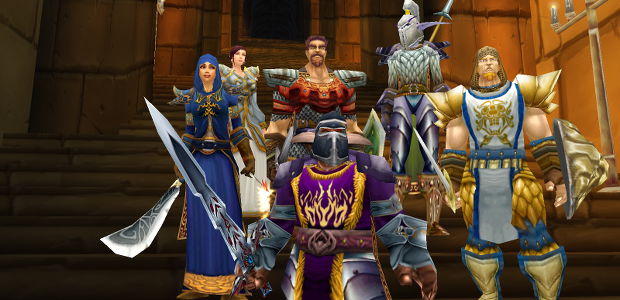
For players who played WoW before any expansions, in the Burning Crusade, and in the first half of Wrath of the Lich King, running dungeons went a certain way. You needed 5 players: a tank, a healer, and 3 DPS. You could organize a dungeon run with your friends or your "guild", or you could just ask the public over general chat for who else was interested in a run. Finding the tank or healer was often the longer part, but eventually you'd organize a group and head out.
Then things could get interesting. One of your players might be bad and mess up the run. You might argue during the run about who was responsible for pulling too many monsters and leading to a group wipe. Maybe you'd complete the dungeon, but maybe you'd fail. Nothing was certain as you were relying on other people, and a bad argument could descend into harassment and a complete waste of your time (sometimes more than an hour's worth.)
But, sometimes you'd have a real good time. You could stick it out through a really tough boss and several wipes and all cheer together once you finally killed the jerk. You might meet a really good DPS who cracked funny jokes and you'd add him to your friends list, or even offer him an invite to your guild. And if you met a tank who was patient and helpful and seemed to like you, well hell, you added him to your friends list and now had a tank to ask for future runs instead of standing around town like a pleb. If you were really lucky, maybe the run would go so well that you'd just keep the same group and go to another dungeon.
Social connections were made. They were online, and based around getting loot, but they were real and engaged the social parts of our brain.
Image result for blizzard friends list
It could take a frustratingly long time to get the loot you wanted this way, and sometimes there was harassment after groups went bad, but you did make friends and communities along the way. Do not underestimate how many geeks playing MMOs wanted those friends and communities.
Then, Blizzard saw this and how inefficient and socially laborious it was, and decided to fix it. They added an "LFG" tool (for, looking for group.) Here's how it worked:
  1. You hit a button saying what dungeon you wanted and what spec you were.
  2. It placed you anonymously in a line for the next group that could fit you. (Healers and tanks would get a group immediately, overpopulated DPS would wait several minutes.)
  3. As soon as your group was full, it teleported you to the dungeon and you could get started.
  4. If someone was a problem, the rest of the group could vote to kick them out.
  5. The dungeon run would proceed with a minimal of talking, the boss would be killed, people would get their loot, and disband.
  6. If you found your group wasn't up to the challenge, you could easily disband and queue in the LFG again anyway, so no need to bang your head on a difficult boss.
So, instead of coming home and spending an evening doing social organization to play WoW, you logged on, hit the button, and 45 minutes later you'd have loot, all with barely interacting with another person.
dungeon_finder
This was hugely popular. People loved it. DPS had to wait in line, but it was a fair line and they knew they'd get a run at the end of it. Tanks had instantly available dungeons and no more people bugging them to come run with them. Loot was flowing easily, and bosses were being downed more than ever before. Pretty soon even talking in an LFG group was considered weird and rude, because it interrupted the smooth flow of acquiring loot as fast as possible.
Within months the friends list, of people you met in game and didn't know IRL, is empty. How or why would you even go about making new friends after all?
Image result for blizzard friends list
And the loot was good, yeah. But after a dozen quick runs you had all the loot, and why run any more LFGs then. Did you pay for and install a game just so you could have the right electronic sword? Like, what even is the point of a massively multiplayer game when... you don't interact with any other players as players?
(A few years later Blizzard implemented this for raiding too, the higher end content in WoW, which was one of the main reasons to join a guild.)
So yeah, you get more stuff, and some of the rough edges of bad interactions are rubbed off. Those are the benefits of an ordered tool that does all your social interactions for you.
But, it was lonely. You might log on and play for an evening (again, a multiplayer game you chose to buy) and never talk to anyone the whole time. You might go away for a year, come back, and no one even knew you were gone.
If you value loot, and are very risk averse for bad social conflict, this is fine. If you value friendships and social memories, this is austerity.
Now imagine what I just described as applied to romance, and we called it Tinder. Imagine it for every human endeavor that is become standardized and streamlined and we're eliminating the difficult meatspace negotiation parts for. Think about this the next time you wonder why, as we have more loot, more sex, more games, and more media that fits our tastes than ever before, we're also less satisfied than we've ever been.